TIERRA DEL FUEGO BIRDING TOURS

Austral Parakeet

Psittaciformes > Psittacidae
Enicognathus ferrugineus

IUCN Red List category

Least Concern

Good birding season

Year-round (best in Spring)

Best time to visit

October to January

Records in Tierra del Fuego

2533 observations

234 photos

15 audios

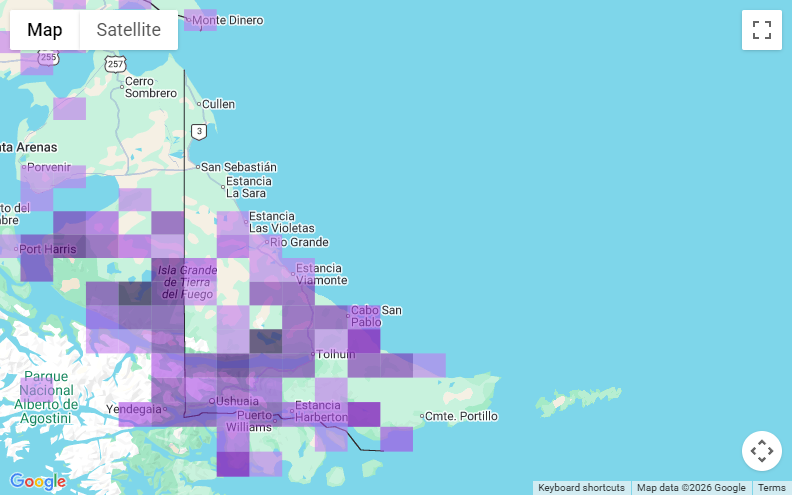
RANGE MAP BY EBIRD

OVERVIEW

About Austral Parakeet

A long-tailed green conure, the Austral Parakeet is the southernmost parrot in the Americas. Social, vocal, and often conspicuous, it forms flocks that may exceed 100 individuals, especially outside the breeding season.

Although primarily a seed-eater, it also consumes nuts, fruits, berries, and leaf buds. In rural areas it may forage in cultivated fields and can cause damage to grain crops. Despite harsh southern winters, it remains resident in much of its range. Nesting occurs in deep tree cavities, where clutches typically contain 4–8 eggs.

Conservation note

Listed as Least Concern and generally common throughout its range, with substantial habitat occurring inside protected areas in both Chile and Argentina. Although occasionally persecuted as an agricultural pest and subject historically to small-scale trapping, populations remain stable overall. Continued conservation of temperate forest ecosystems, particularly mature cavity-bearing trees, is important for long-term breeding success.
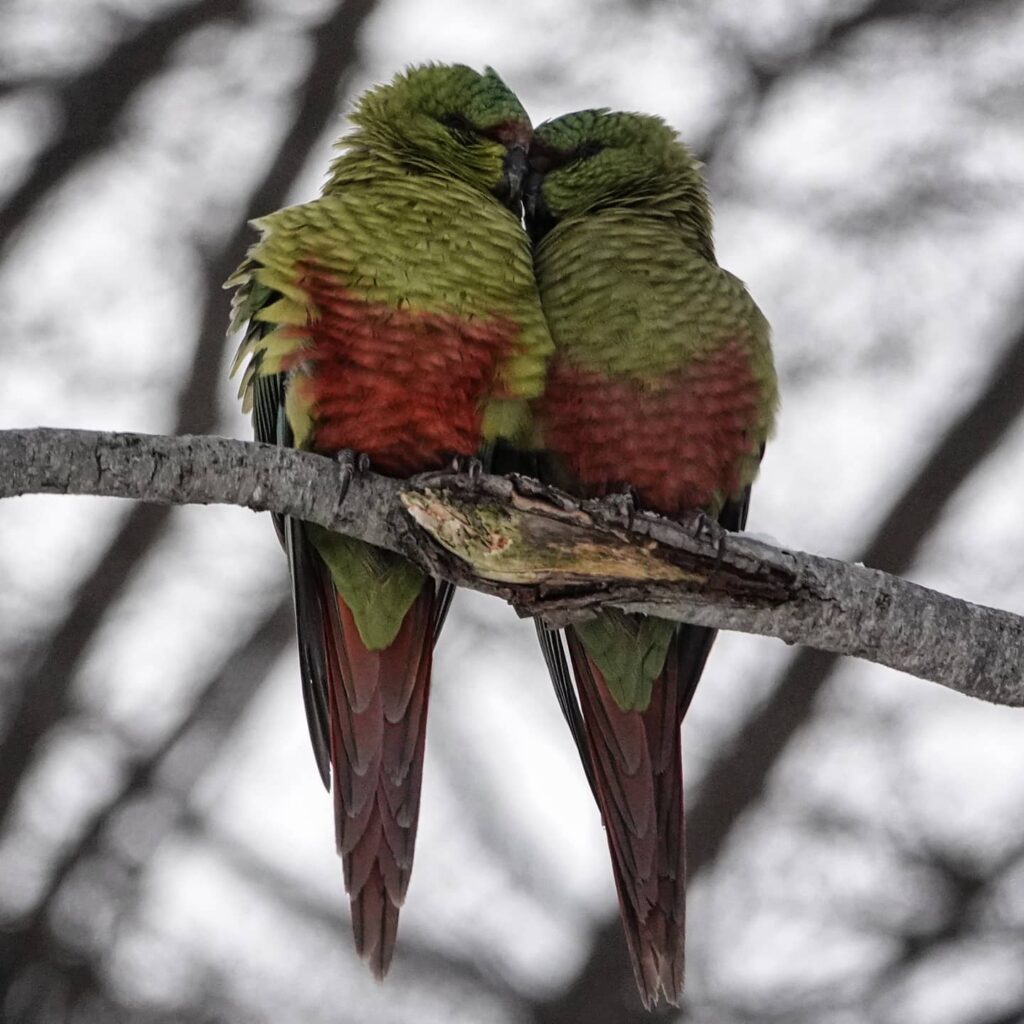
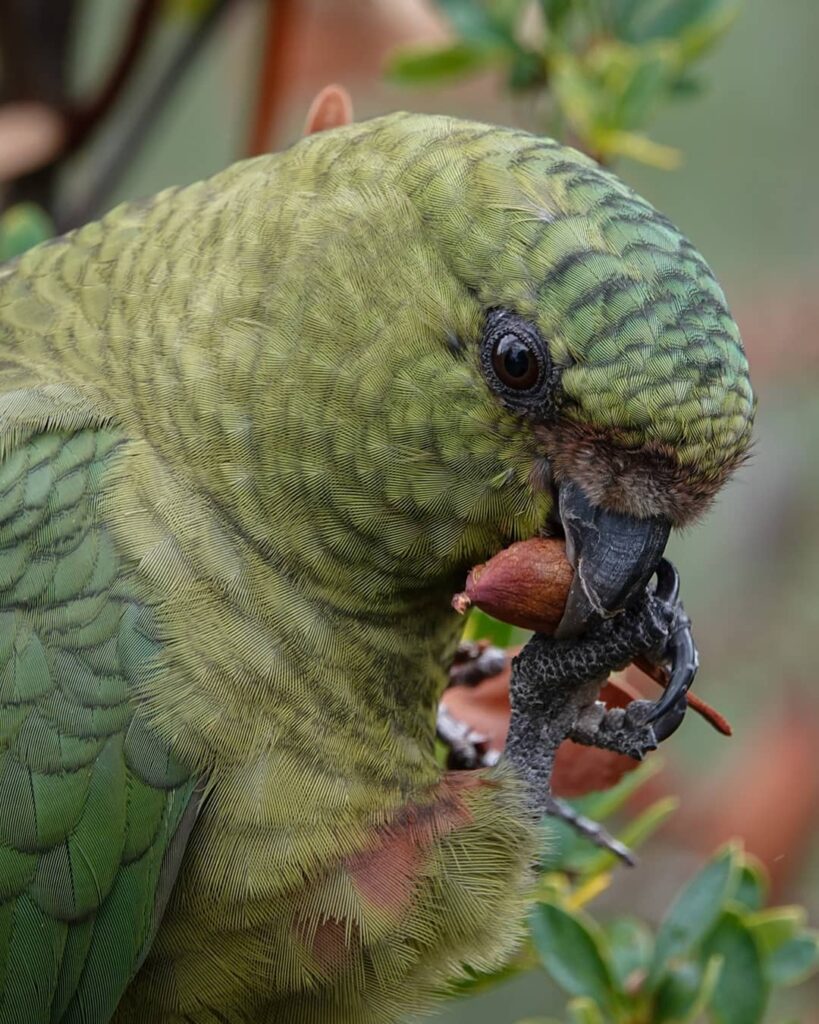
BIRDS IMAGE GALLERY

Austral Parakeet

Habitat and distribution

Occurs in southern Chile and southwestern Argentina, from central Chile south through Patagonia to Tierra del Fuego. Two subspecies are recognized: – E. f. minor: Central-southern Chile to Aysén; Neuquén to northwestern Santa Cruz (Argentina). – E. f. ferrugineus: Extreme southern Chile and Argentina to Tierra del Fuego. Inhabits temperate Nothofagus forests, mixed woodlands (mixed evergreen forests), forest edges, and adjacent semi-open areas such as ranchland and cultivated zones. Occurs from sea level in the far south up to 1,200–2,000 m in the northern part of its range.

Observation tips

  • Listen for its distinctive nasal, grating call (“grrreh-grrreh...”) often delivered in repeated series.
  • Most easily detected in noisy, fast-moving flocks, especially along forest edges or over clearings.
  • Frequently seen feeding in Nothofagus forests, bamboo stands (Chusquea), or Araucaria areas.
  • In winter in northern Patagonia, check for downslope movements toward valleys and lower elevations.
  • Often tame and approachable, particularly in rural or semi-urban settings.

Austral Parakeet

Top birding tours

BOOK YOUR TOUR

Ready to explore Tierra del Fuego with us?

Get in touch to check availability, customize your experience, or ask any questions before booking.