TIERRA DEL FUEGO BIRDING TOURS

Magellanic Woodpecker

Piciformes > Picidae
Campephilus magellanicus

IUCN Red List category

Least Concern

Good birding season

Year-round (best in Spring)

Best time to visit

October to January

Records in Tierra del Fuego

1782 observations

456 photos

11 audios

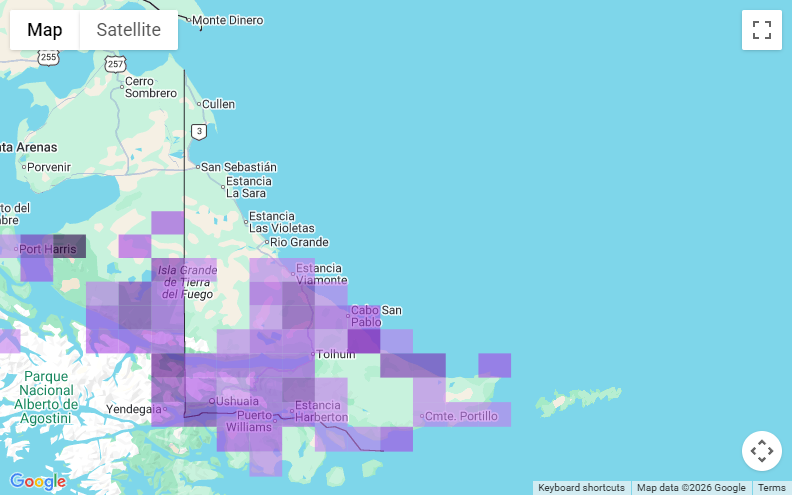
RANGE MAP BY EBIRD

OVERVIEW

About Magellanic Woodpecker

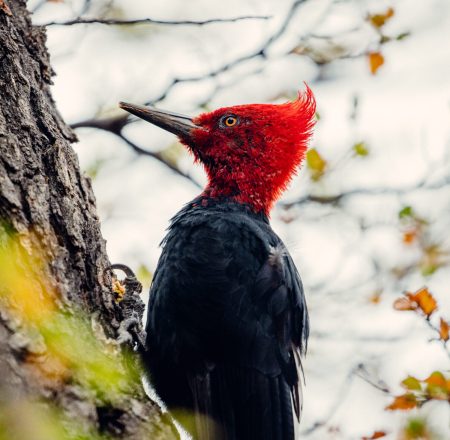
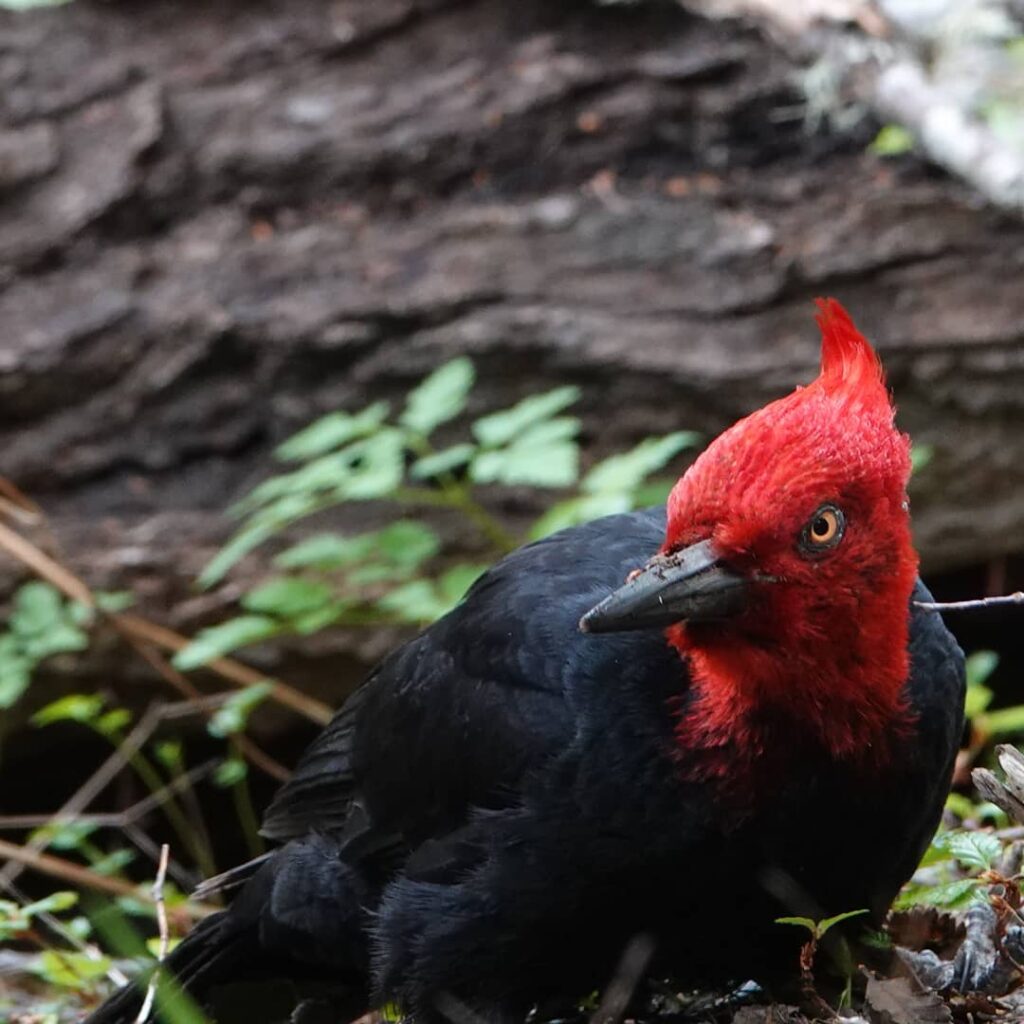
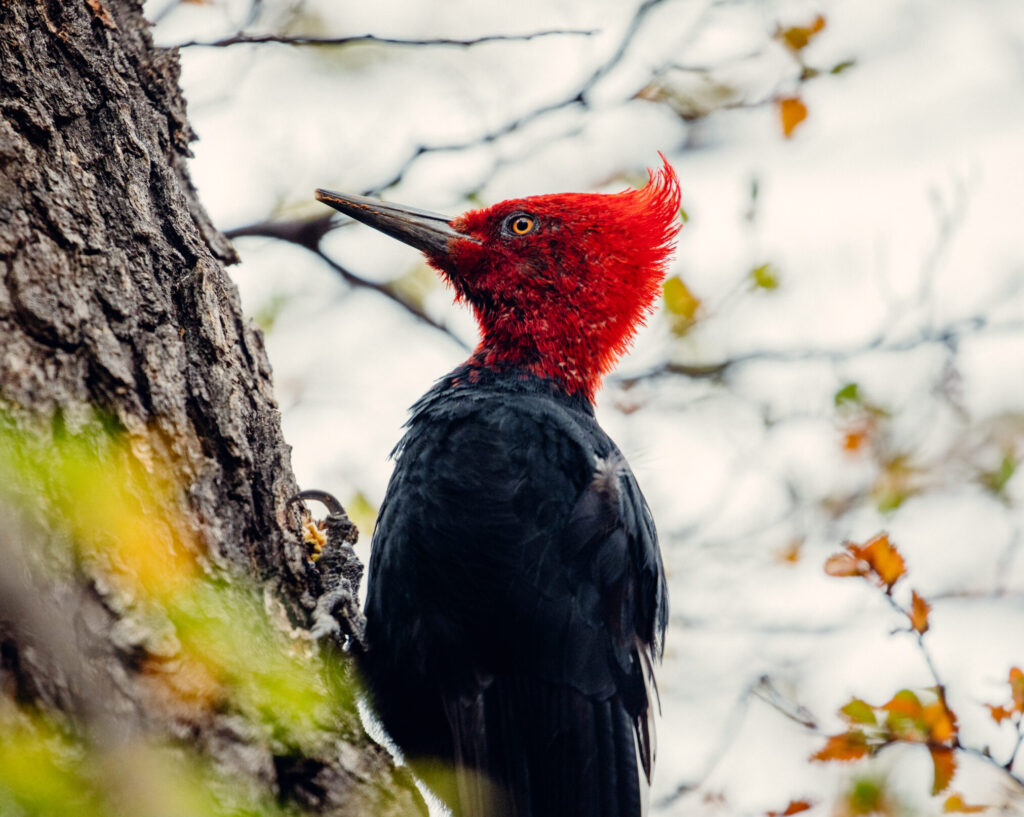
The Magellanic Woodpecker is the largest woodpecker in South America and one of the most emblematic birds of the austral temperate forests of Chile and Argentina. Entirely dependent on mature Nothofagus-dominated forests, it is unmistakable for its bold black-and-white plumage and striking sexual dimorphism: males with a solid red head and straight crest, females with a black face and distinctive curled crest with red at the base of the bill.

Its powerful double drum — a resonant “ta-dap!” — carries long distances through old-growth forest. Pairs or small family groups move methodically through large forest territories, often leaving conspicuous excavation marks on trunks and large branches.

Conservation note

Globally listed as Least Concern, but regionally vulnerable due to forest loss, fragmentation, and conversion to plantations, particularly in north-central Chile.
The species requires large territories and mature forest structure, making it sensitive to habitat degradation. While it occurs in numerous protected areas across Chile and Argentina, continued preservation of intact austral temperate forest is essential for its long-term persistence.
BIRDS IMAGE GALLERY

Magellanic Woodpecker

Habitat and distribution

Endemic to southern South America, ranging from central Chile (Maule Region) and western Neuquén (Argentina) south to Tierra del Fuego and adjacent islands. Closely associated with austral temperate forests, particularly mature or old-growth Nothofagus stands. Occurs from sea level in the far south up to 2,000 m in the northern part of its range. Although it may use second-growth or managed forest, it depends heavily on large trees for nesting and foraging.

Observation tips

  • Search in mature, continuous Nothofagus forest, especially areas with large standing trees and deadwood.
  • Listen for the loud, far-carrying double drum “ta-dap!”, often the first clue to its presence.
  • Look for pairs or small family groups (2–4 individuals) moving together through the forest.
  • Watch for large, fresh excavations on trunks — much heavier and deeper than those made by smaller woodpeckers.
  • Activity begins very early near sunrise, with steady foraging throughout the day.
  • In Tierra del Fuego, check areas with beaver-created wetlands, where dead trees can attract feeding birds.

Magellanic Woodpecker

Top birding tours

BOOK YOUR TOUR

Ready to explore Tierra del Fuego with us?

Get in touch to check availability, customize your experience, or ask any questions before booking.