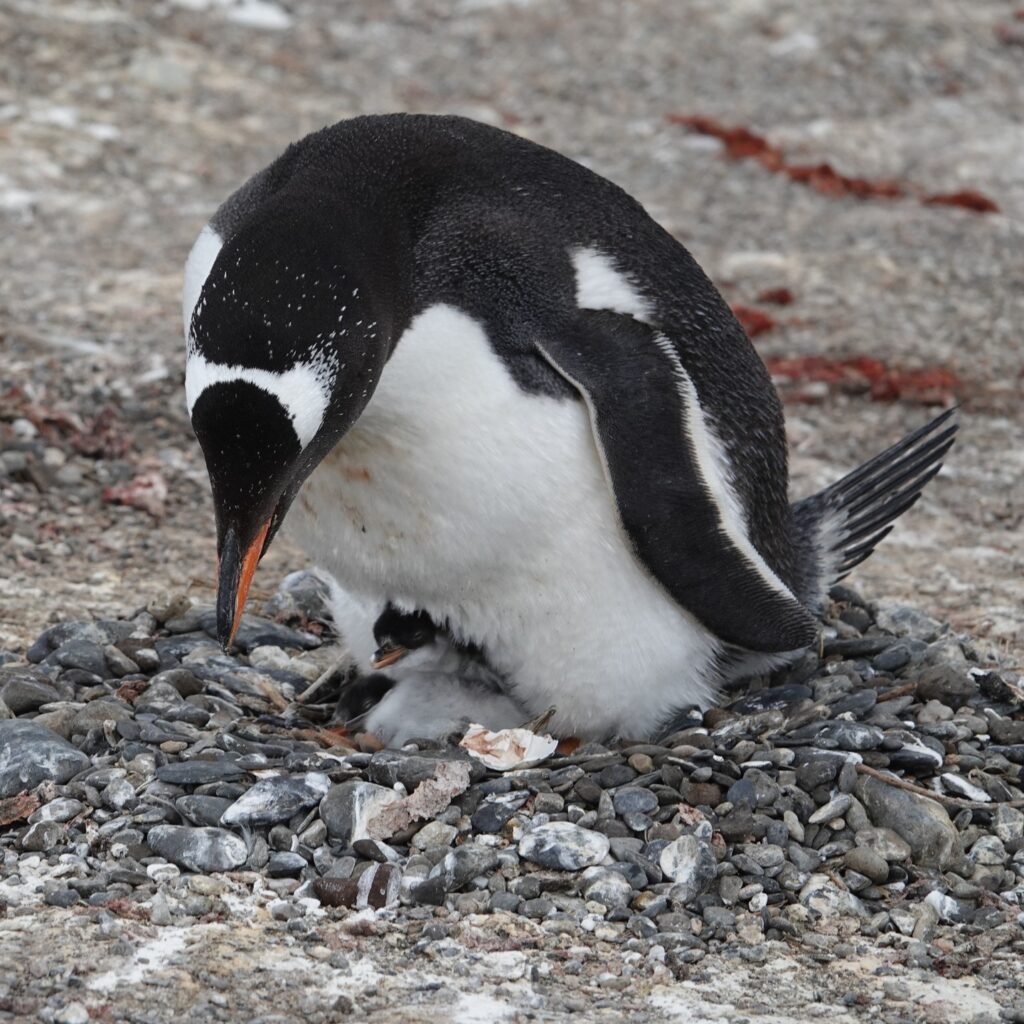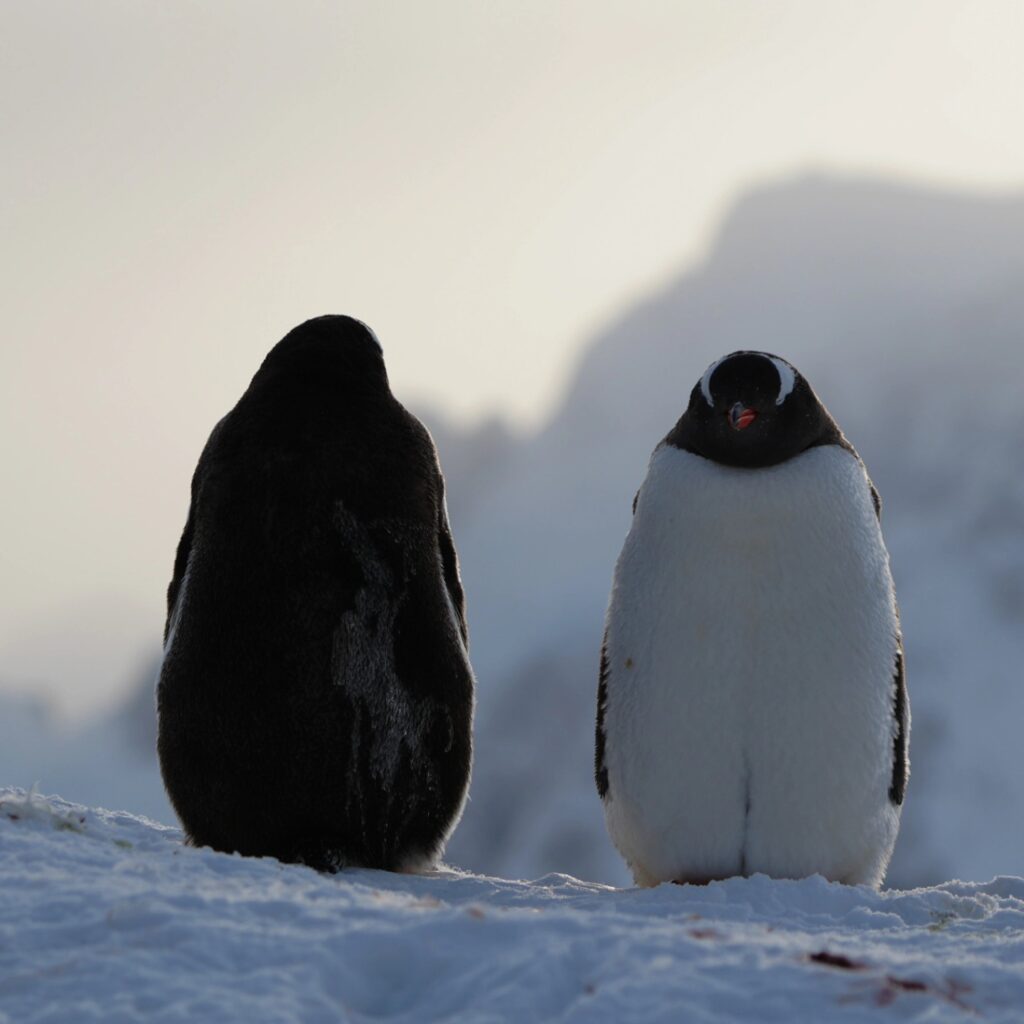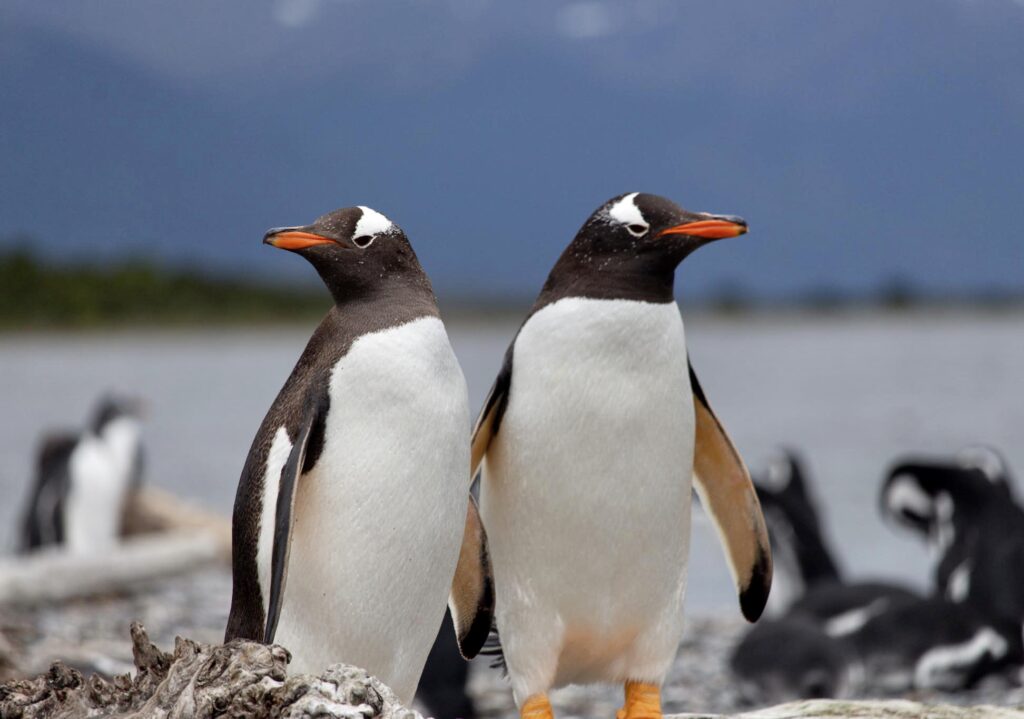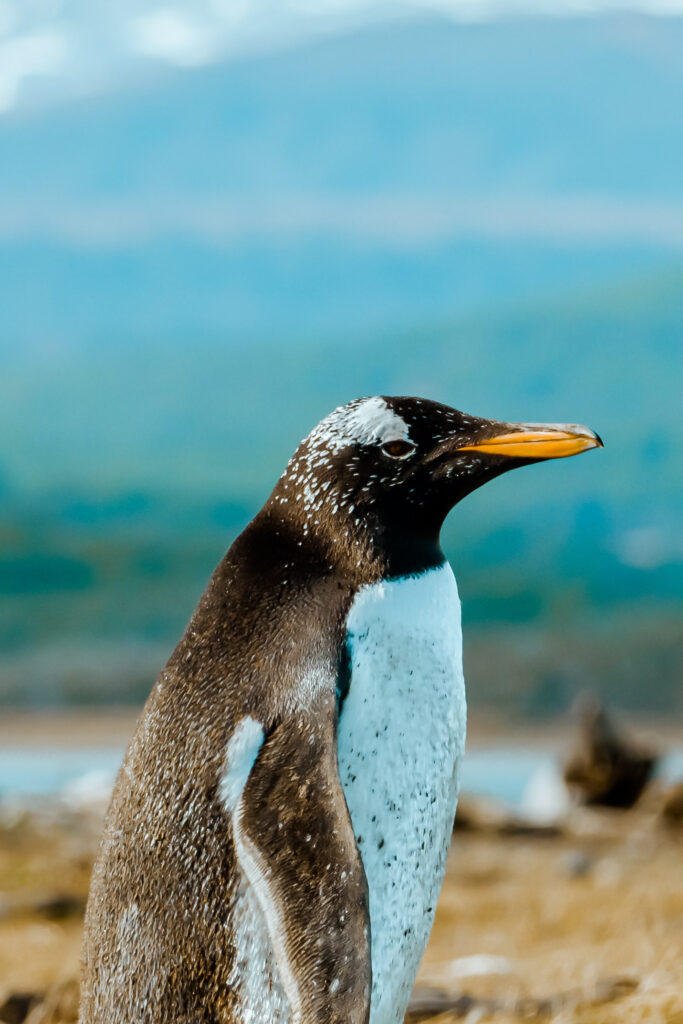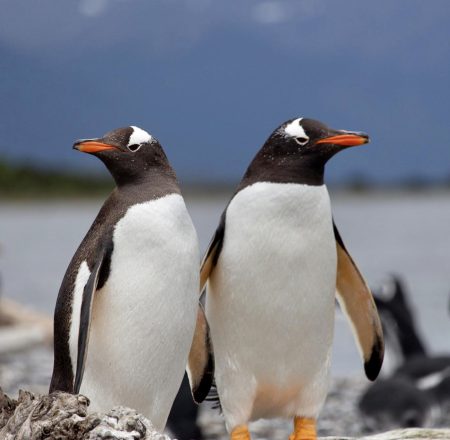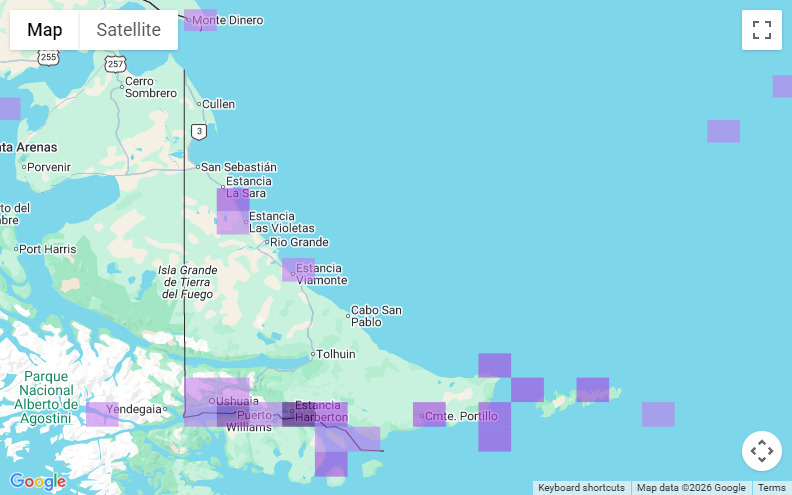
The Gentoo Penguin is the most northerly distributed member of the genus Pygoscelis. Although its core range is sub-Antarctic, it extends along the southern cone and can be found far up the Argentine coast, almost reaching reaching northern Patagonia and occasionally farther north along the Argentine coast. Compared with its congeners, it is the easiest Pygoscelis to observe from land, as it typically forages relatively close to shore.
Unlike Adélie and Chinstrap Penguins, many Gentoo populations remain resident near their breeding colonies year-round, although some Antarctic Peninsula populations are partially migratory. Diet varies geographically: southern populations rely heavily on krill, while more northerly colonies consume greater proportions of fish and crustaceans.
Conservation note
The Gentoo Penguin is currently classified as Least Concern, and global numbers are estimated at a minimum of roughly 384,000 breeding pairs. In many parts of its range—particularly along the West Antarctic Peninsula and in the Malvinas Islands—populations have increased over the past few decades, in some cases expanding southward as sea-ice conditions have changed. However, trends vary regionally. Some colonies have declined due to historical egg collection, oil harvesting, introduced predators, disturbance near research stations, and localized tourism pressure. Population dynamics are strongly influenced by oceanographic conditions, prey availability, and large-scale climatic indices such as the Southern Oscillation. Although not globally threatened, continued monitoring is essential, particularly in the context of climate change, fisheries interactions, and expanding human presence in sub-Antarctic and Antarctic regions.