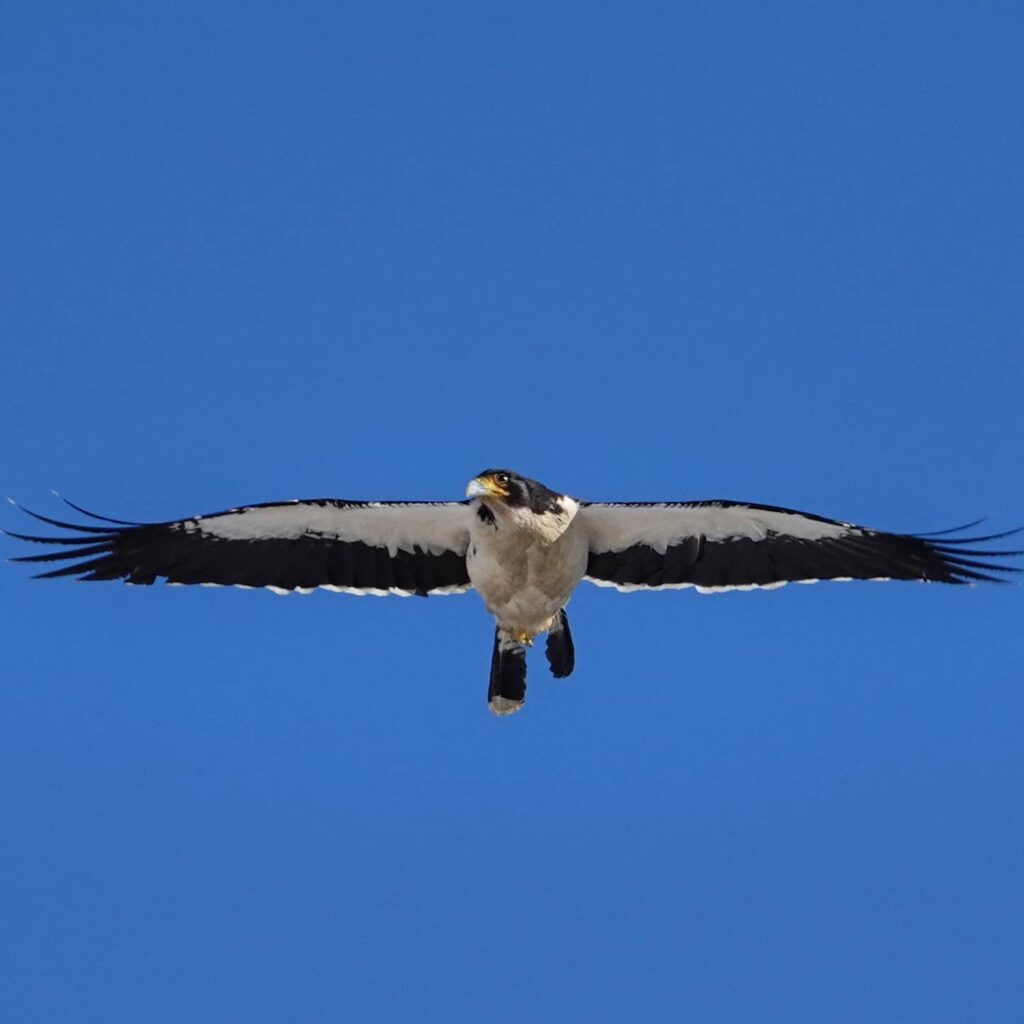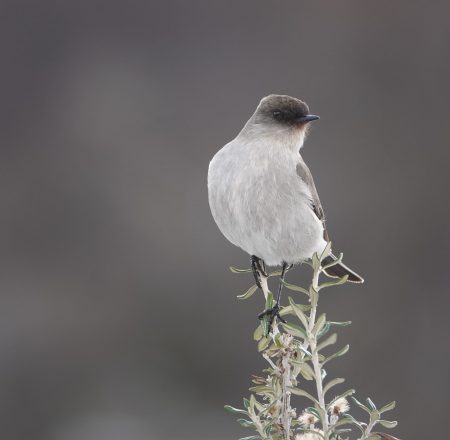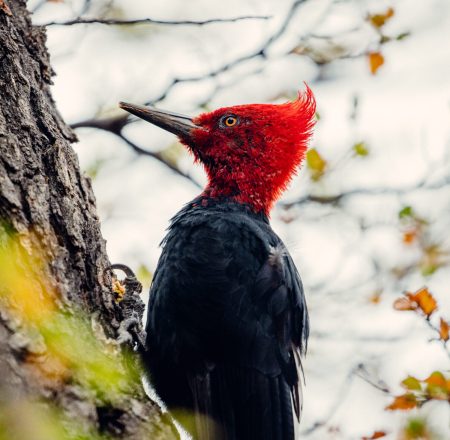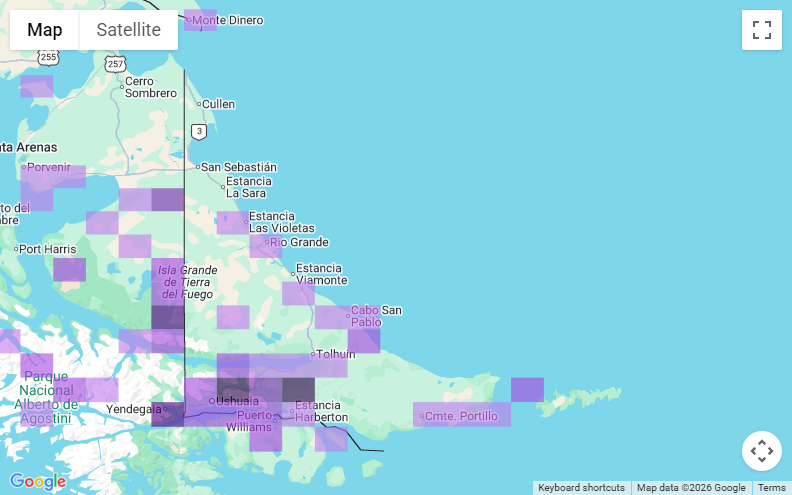
The White-throated Caracara is one of the characteristic scavengers of the southern Andes and Patagonian highlands. Endemic to southern Chile and Argentina, it inhabits remote mountain landscapes where it is often encountered alone or in pairs rather than in large gatherings typical of other caracaras.
Adults are immediately recognizable by their contrasting plumage: dark brown to black upperparts set against a clean white throat, chest, and upper belly. The bright orange-yellow facial skin and cere stand out strongly against the darker head, especially in good light. Compared to its close relative, the Mountain Caracara, it tends to occupy lower elevations and shows more extensive white on the underparts.
An opportunistic generalist, the White-throated Caracara feeds largely on carrion but will also take small prey. Despite its wide range, it remains surprisingly little studied and can feel elusive due to its vast, rugged habitat.
Conservation note
Globally classified as Least Concern, the White-throated Caracara has a large extent of occurrence. However, suitable habitat within that range is more limited than broad distribution maps suggest, and nesting records remain relatively scarce.
Potential threats include poisoning from toxic baits used against predators, exposure to veterinary pharmaceuticals in livestock carcasses, and increasing wind farm development across Patagonia. Although not currently considered threatened, more research is needed to clarify population size, trends, and long-term conservation outlook.