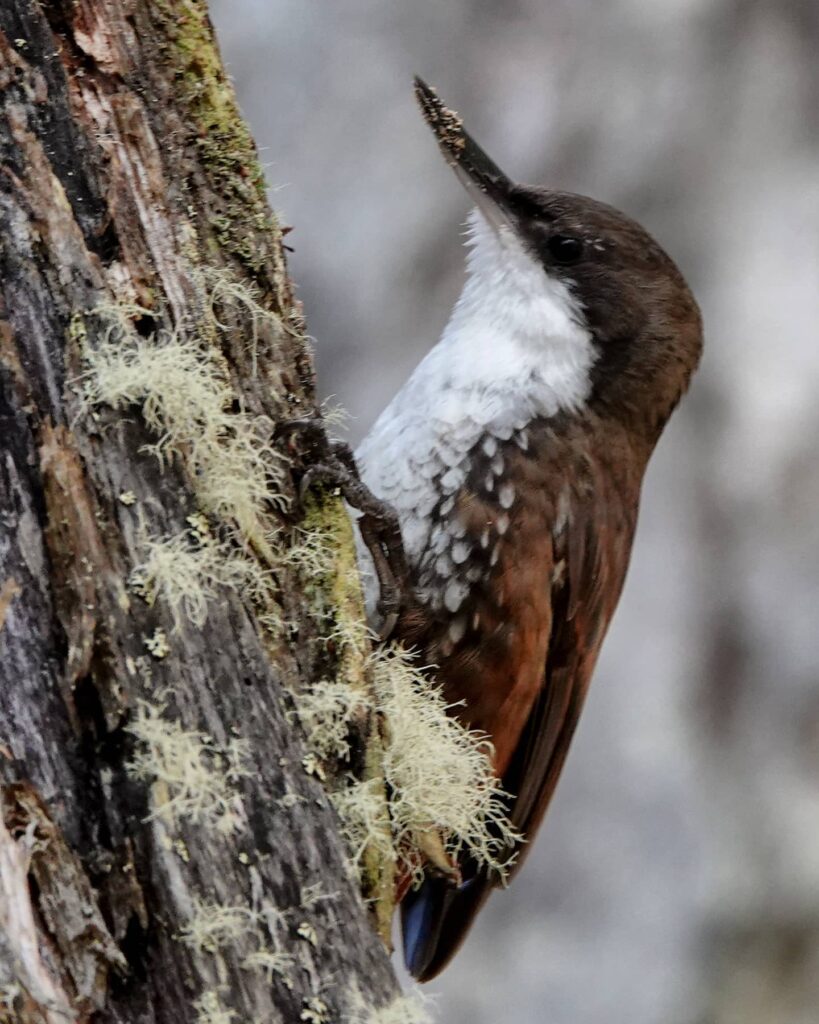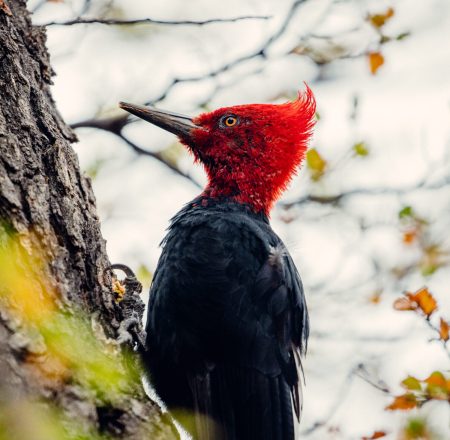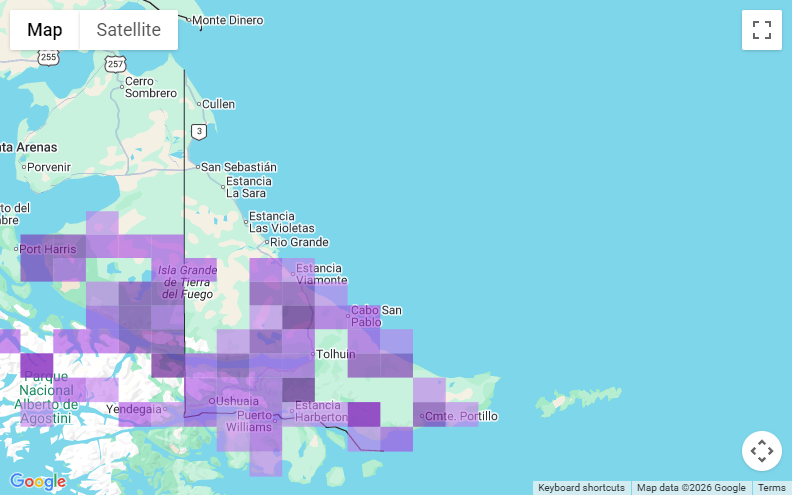
The White-throated Treerunner is a classic bird of the southern temperate forests of Chile and Argentina, especially Nothofagus woodlands. Often found alongside the Thorn-tailed Rayadito, it forms one of the most characteristic “forest duos” of Patagonia and Tierra del Fuego—particularly in winter, when mixed flocks are common.
Nuthatch-like in shape and behavior, it spirals up trunks using its stiff, spiny tail for support, prying at bark with a slightly upturned bill to uncover larvae and insects. It is sometimes easier to detect by sound than sight, giving sharp, repeated ticking calls from within the canopy.
A key ecological role: it is a primary cavity nester, excavating holes that later become nesting sites for other forest species. While not globally threatened, it depends strongly on structurally complex native forests, and is sensitive to habitat degradation and “over-cleaned” forest management that removes dead wood.
Conservation note
Globally listed as Least Concern, the White-throated Treerunner remains fairly common in suitable forest, but it is highly dependent on native forest structure—including old trees and standing dead wood. Practices that “clean” forests by removing dead or diseased trees can reduce nesting and foraging opportunities, and repeated burning can eliminate local populations once dead trunks are no longer available.
Because it creates cavities used by other species, maintaining mixed-age native forest with snags is especially important for long-term ecological integrity.