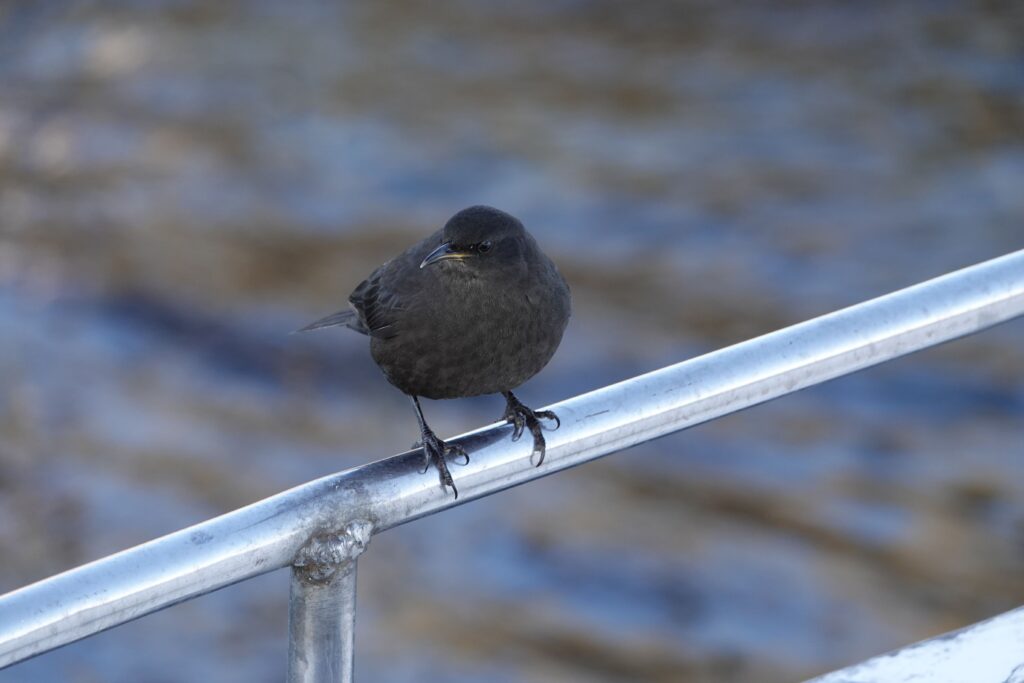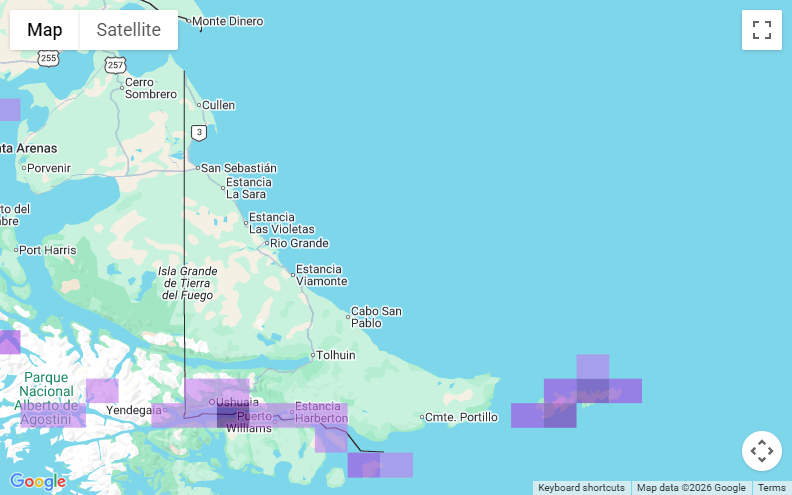
The Blackish Cinclodes, known locally in the Malvinas Islands as the “Tussac Bird,” is one of the most characteristic passerines of the far southern coasts of South America. It inhabits windswept islands and rocky shorelines at the edge of the continent, often in close association with seabird colonies and marine mammals.
Unlike most members of its genus, this species is almost entirely dark, lacking the contrasting white throat or eyebrow typical of other Cinclodes. Its uniformly brownish-black appearance gives it a distinctive silhouette against coastal rock and grass.
Two forms occur in the region: the Malvinas nominate subspecies and a southern Chile–Argentina coastal form (maculirostris), the latter darker overall and with a noticeable pale base to the bill. Some authors consider them distinct species, but their taxonomic status remains debated.
Conservation note
Currently treated as Near Threatened, the Blackish Cinclodes has a highly restricted range and is particularly vulnerable to introduced terrestrial predators such as rats and cats. On the Malvinas, its distribution has contracted historically and populations are largely confined to islands free of invasive mammals.
Its tameness and ground-foraging behavior make it especially susceptible to predation. Continued protection of predator-free islands and coastal habitats is essential for the long-term persistence of the species.