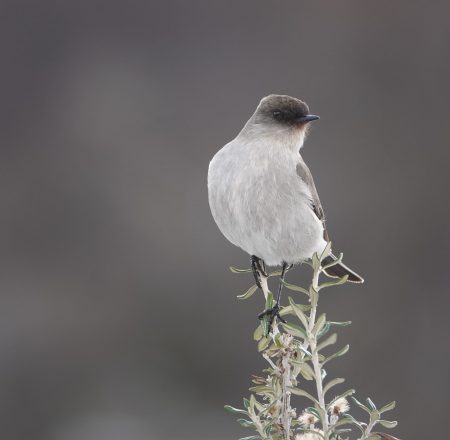
The Yellow-bridled Finch is one of the most striking passerines of the high Andes and southern Patagonia. Strongly terrestrial and often associated with windswept alpine environments, it inhabits cushion-plant slopes, snowmelt streams, and open high-elevation plateaus above treeline.
The species is notable for its marked sexual dimorphism and plumage variability. Males show a bold yellow-and-black facial pattern and may appear gray, olive, or bright yellow depending on morph. Females are streaked brown to yellowish and more subdued, though still distinctive at close range.
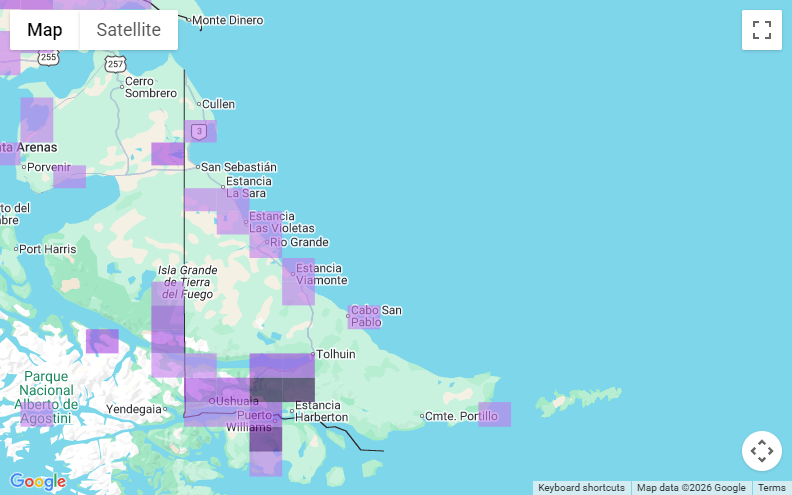
Two subspecies occur: a high-Andean form (barrosi) and a southern Patagonian form (xanthogramma) that can descend to sea level in Tierra del Fuego. During the nonbreeding season, the southern subspecies may form mixed flocks with its sister species, the White-bridled Finch.
Some studies suggest that ancestral wandering individuals may have reached the Tristan da Cunha archipelago, potentially giving rise to the Gough Island Finch and the genus Nesospiza — making this lineage particularly interesting from an evolutionary perspective.
Conservation note
Globally classified as Least Concern, the Yellow-bridled Finch remains patchily distributed and generally uncommon. Its extirpation from the Malvinas Islands highlights its potential vulnerability to habitat change.
High-Andean habitats are particularly sensitive to climate change, and long-term warming may affect alpine vegetation zones used by this species. Continued monitoring of both subspecies is advisable given their restricted and specialized environments.