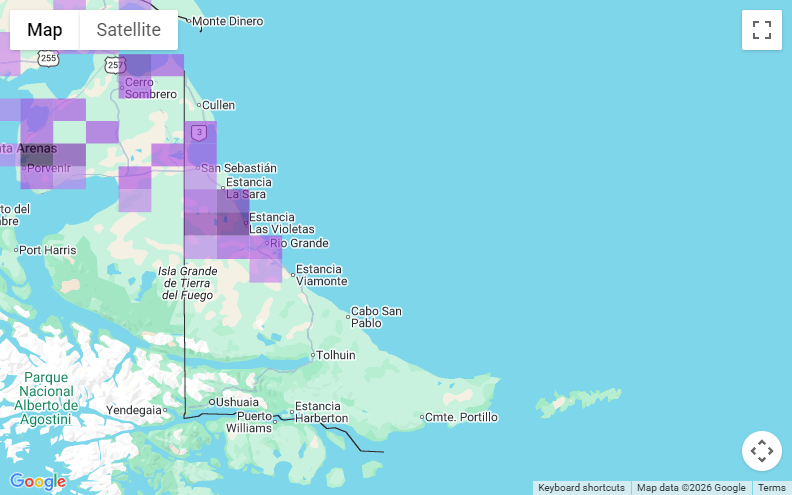
The Magellanic Plover is not a true plover, but the sole representative of its own family, Pluvianellidae. This small shorebird of southern Patagonia combines a dove-grey appearance with unusual structure and behavior, making it one of the most distinctive birds of the Patagonian steppe and coastal wetlands. Its short, peg-like bill, pale grey plumage, pinkish-red legs, and white wing bar in flight give it a subtle but unmistakable profile.
Its behavior is equally remarkable. It often stamps on wet mud to bring invertebrates to the surface, then runs rapidly in tight circles while feeding. Unlike most shorebirds, adults feed their chicks and may regurgitate food from a well-developed crop — a unique trait among waders. These peculiarities once led to confusion about its relationships, but molecular studies confirm that it is a shorebird, likely most closely related to the sheathbills. The species breeds only in southernmost Patagonia.
Conservation note
The Magellanic Plover is currently classified as Vulnerable. Population estimates are low, possibly around 1,000–1,500 individuals, although higher figures have been suggested. Breeding densities are generally low, with most sites holding only single pairs. Important winter concentrations occur at Río Gallegos estuary and other key coastal wetlands in southern Argentina. Threats include habitat disturbance, predation, trampling by livestock at nesting sites, and the species’ naturally small and fragmented population. Although it occurs in several protected areas, its restricted breeding range and low overall numbers make continued monitoring and habitat protection essential.