TIERRA DEL FUEGO BIRDING TOURS

Blackish Cinclodes

Passeriformes > Furnariidae
Cinclodes antarcticus

IUCN Red List category

Good birding season

Spring & Summer

Best time to visit

October to March

Records in Tierra del Fuego

607 observations

206 photos

0 audios

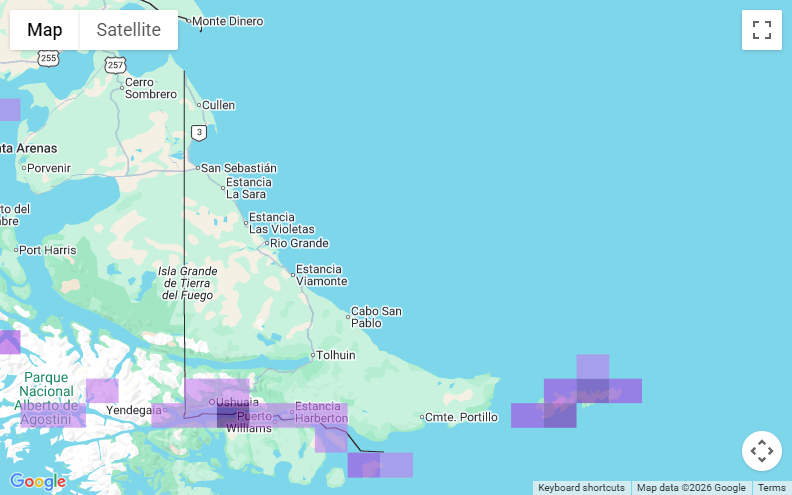
RANGE MAP BY EBIRD

OVERVIEW

About Blackish Cinclodes

The Blackish Cinclodes, known locally in the Malvinas Islands as the “Tussac Bird,” is one of the most characteristic passerines of the far southern coasts of South America. It inhabits windswept islands and rocky shorelines at the edge of the continent, often in close association with seabird colonies and marine mammals.

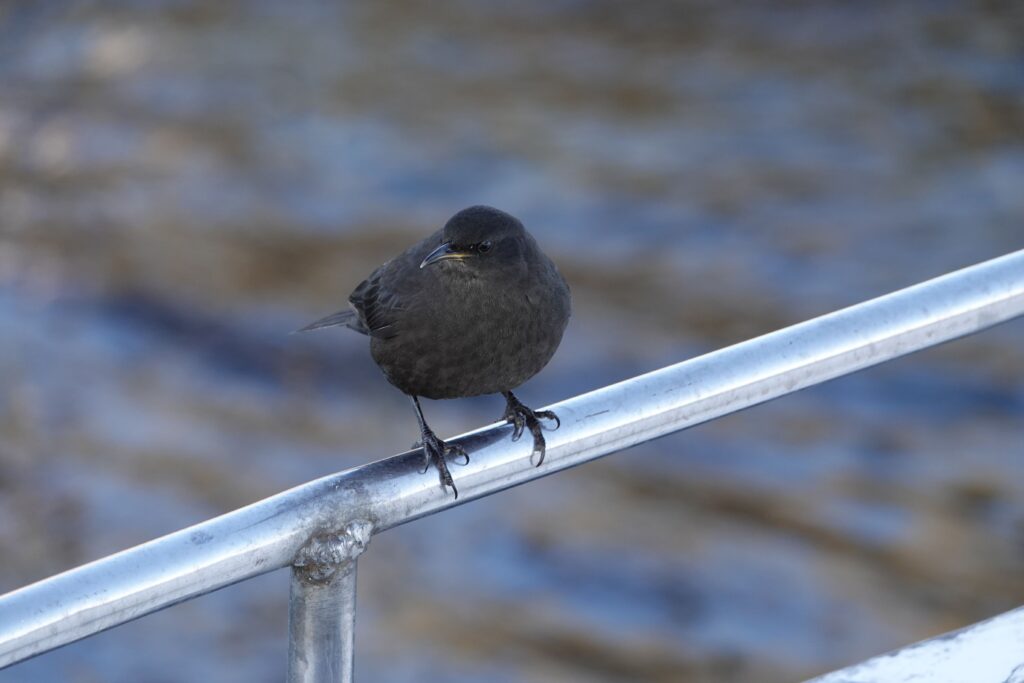
Unlike most members of its genus, this species is almost entirely dark, lacking the contrasting white throat or eyebrow typical of other Cinclodes. Its uniformly brownish-black appearance gives it a distinctive silhouette against coastal rock and grass.

Two forms occur in the region: the Malvinas nominate subspecies and a southern Chile–Argentina coastal form (maculirostris), the latter darker overall and with a noticeable pale base to the bill. Some authors consider them distinct species, but their taxonomic status remains debated.

Conservation note

Currently treated as Near Threatened, the Blackish Cinclodes has a highly restricted range and is particularly vulnerable to introduced terrestrial predators such as rats and cats. On the Malvinas, its distribution has contracted historically and populations are largely confined to islands free of invasive mammals.

Its tameness and ground-foraging behavior make it especially susceptible to predation. Continued protection of predator-free islands and coastal habitats is essential for the long-term persistence of the species.

BIRDS IMAGE GALLERY

Blackish Cinclodes

Habitat and distribution

The Blackish Cinclodes is restricted to the extreme south of South America. It occurs in the Malvinas Islands and on remote islands and coastal peninsulas of southern Chile and Argentina, including the Brecknock Peninsula, Navarino Island, Staten Island, and the Cape Horn Archipelago. It is strongly tied to coastal environments, especially rocky shores, short-grazed grasslands, and tussock grass (Poa flabellata) habitats. Highest densities are often found near seabird colonies and marine mammal haul-outs, where food availability is high. It is primarily a low-elevation species, usually occurring from sea level to about 200 meters.

Observation tips

  • Best searched for along rocky coastal beaches, especially near seabird or sea lion colonies.
  • Frequently seen walking boldly on rocks or short grass, often surprisingly tame in remote areas.
  • Uniformly dark plumage is a key feature — lacks the white throat typical of many other Cinclodes.
  • The southern mainland form shows a pale yellowish base to the bill, useful at close range.
  • Often forages along the high-tide line, probing among kelp and debris.
  • In tussock habitat, watch for birds moving between grass clumps close to the ground.

Blackish Cinclodes

Top birding tours

BOOK YOUR TOUR

Ready to explore Tierra del Fuego with us?

Get in touch to check availability, customize your experience, or ask any questions before booking.