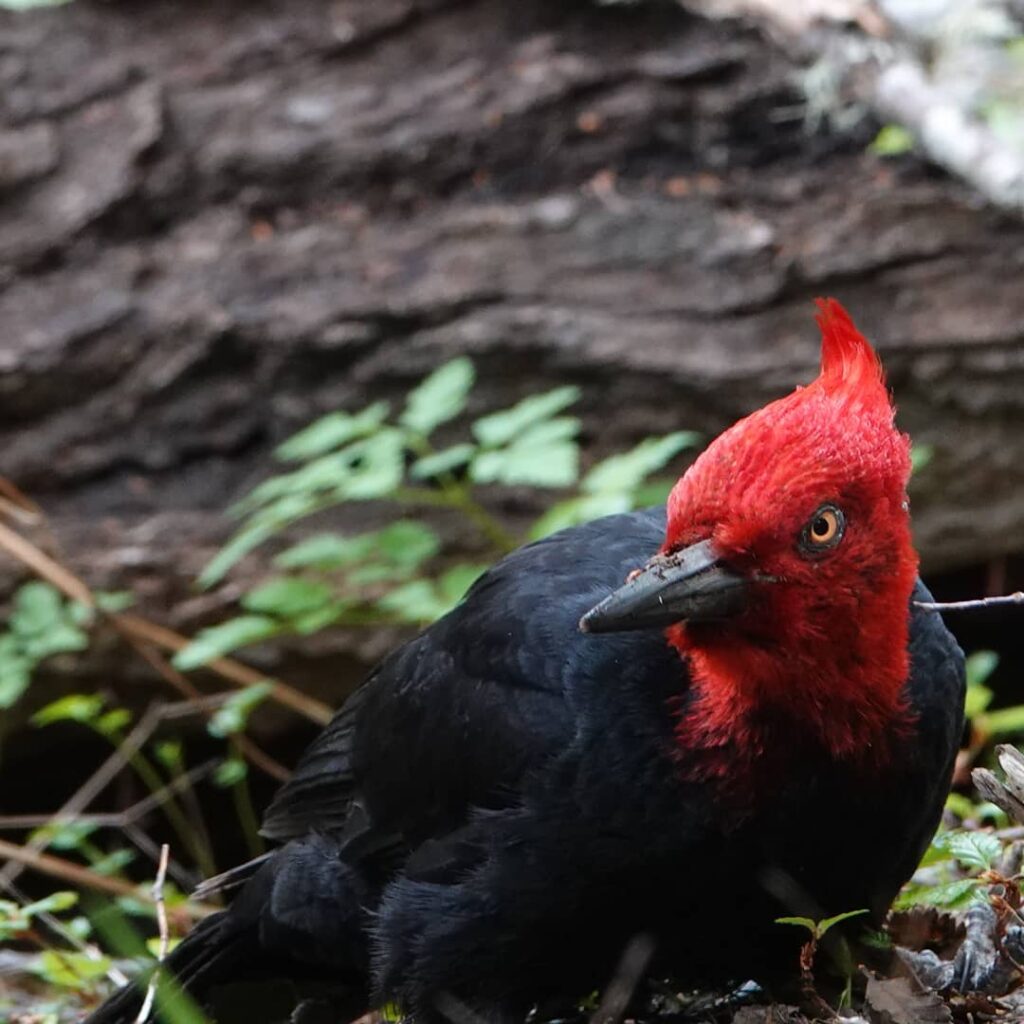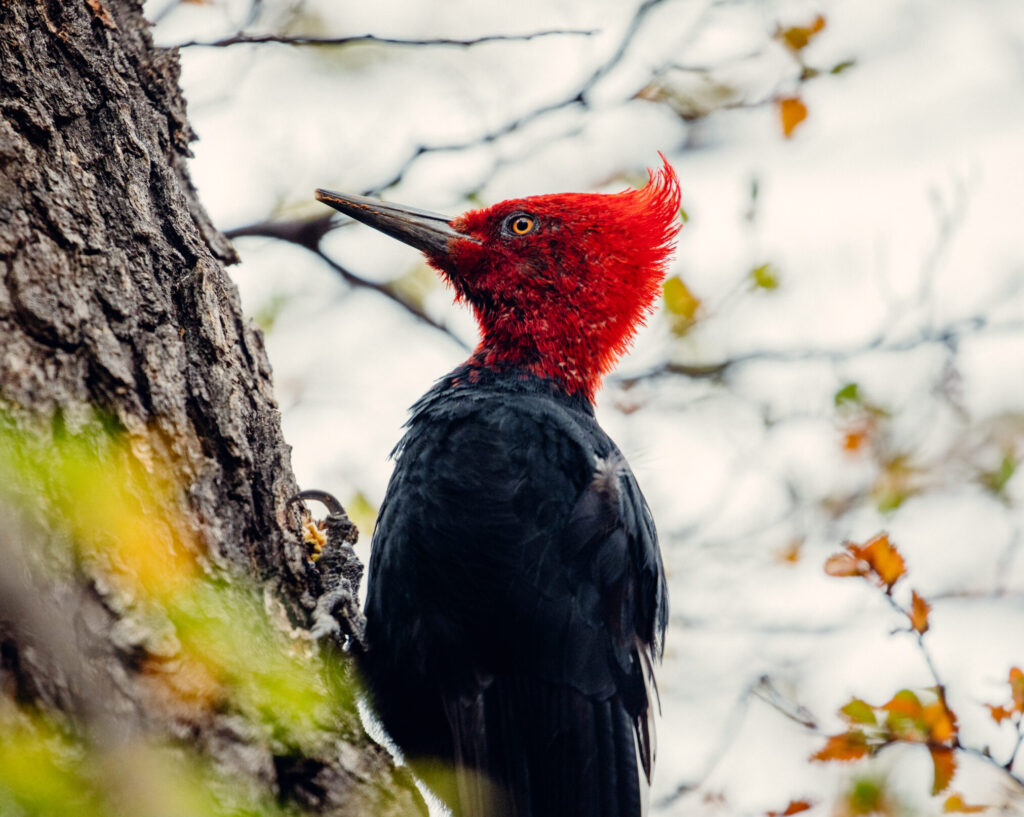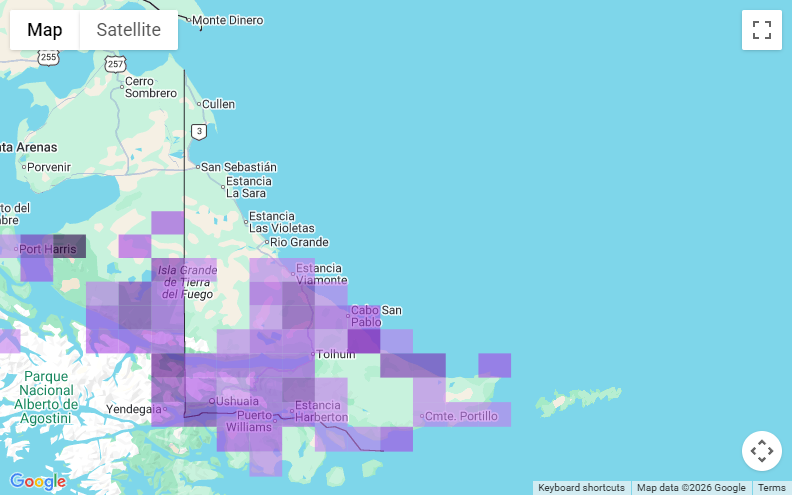
The Magellanic Woodpecker is the largest woodpecker in South America and one of the most emblematic birds of the austral temperate forests of Chile and Argentina. Entirely dependent on mature Nothofagus-dominated forests, it is unmistakable for its bold black-and-white plumage and striking sexual dimorphism: males with a solid red head and straight crest, females with a black face and distinctive curled crest with red at the base of the bill.
Its powerful double drum — a resonant “ta-dap!” — carries long distances through old-growth forest. Pairs or small family groups move methodically through large forest territories, often leaving conspicuous excavation marks on trunks and large branches.
Conservation note
Globally listed as Least Concern, but regionally vulnerable due to forest loss, fragmentation, and conversion to plantations, particularly in north-central Chile.
The species requires large territories and mature forest structure, making it sensitive to habitat degradation. While it occurs in numerous protected areas across Chile and Argentina, continued preservation of intact austral temperate forest is essential for its long-term persistence.