TIERRA DEL FUEGO BIRDING TOURS

Rufous-chested Dotterel

Passeriformes > Passeriformes incertae sedis
Zonibyx modestus

IUCN Red List category

Least Concern

Good birding season

Spring & Summer

Best time to visit

October to March

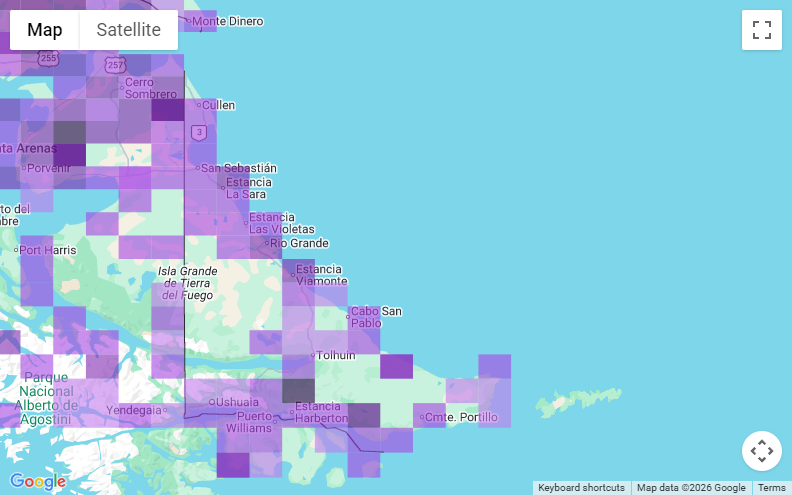
Records in Tierra del Fuego

1337 observations

241 photos

3 audios

RANGE MAP BY EBIRD

OVERVIEW

About Rufous-chested Dotterel

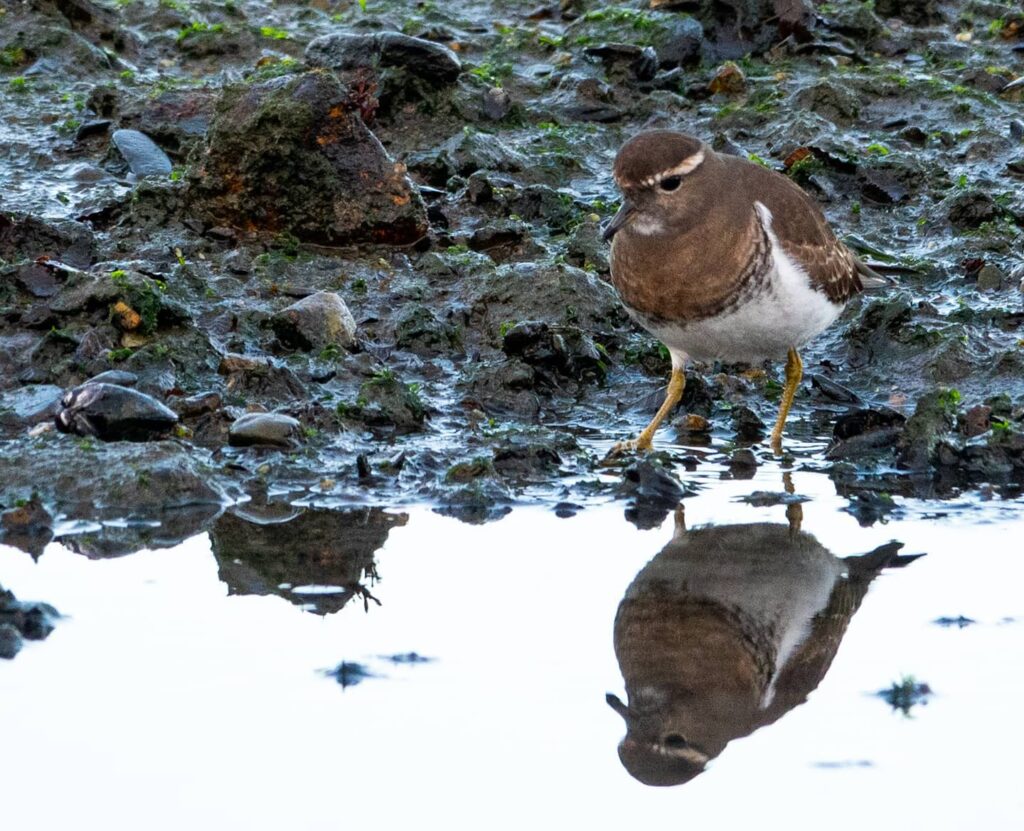
The Rufous-chested Dotterel is one of the most striking shorebirds of southern Patagonia, best known for its vivid breeding plumage. In the austral spring and summer it shows a bold white supercilium, grey face and throat, and a glowing rufous breast sharply bordered below by a dark band, with otherwise clean white underparts. Its brown upperparts and strong color contrasts give it an elegant and unmistakable appearance. Outside the breeding season it becomes much duller, shifting to pale brown and grey tones, though retaining its compact build and alert, terrestrial posture.

It is the only species in its genus and breeds exclusively in the southernmost regions of Patagonia. During the breeding season it is strongly territorial, defending space against both conspecifics and other shorebirds. In the nonbreeding season it becomes more social and may join mixed flocks, especially alongside Two-banded Plovers.
BIRDS IMAGE GALLERY

Rufous-chested Dotterel

Habitat and distribution

The Rufous-chested Dotterel breeds in southern Patagonia, including Tierra del Fuego, the Malvinas Islands, and Patagonian fjords. It occupies a wide range of open habitats during the breeding season, from shrublands and grassy plains to upland marshes and even stony mountain summits. After breeding, many birds move toward coastal and lowland environments. In winter it favors shorelines, flooded and swampy areas, and pampas landscapes, where it may occur in small flocks. It is an early northbound migrant, with some individuals reaching south-central Chile by mid-summer. During the austral winter it becomes widespread along the coasts of the southern cone.

Observation tips

  • In breeding season, scan open steppe and wetland margins for the unmistakable rufous breast bordered by a dark band.
  • In winter, focus on coastal flats, flooded areas, and lowland pampas.
  • Often shares habitat with Two-banded Plover; note that Rufous-chested Dotterel lacks the distinct banded breast pattern of that species.
  • Compared to small sandpipers such as Baird’s or White-rumped Sandpipers, it has a shorter bill and a cleaner, more solid back pattern.
  • Even in dull plumage, the compact structure, pale supercilium, and upright stance are useful field clues.

Rufous-chested Dotterel

Top birding tours

BOOK YOUR TOUR

Ready to explore Tierra del Fuego with us?

Get in touch to check availability, customize your experience, or ask any questions before booking.