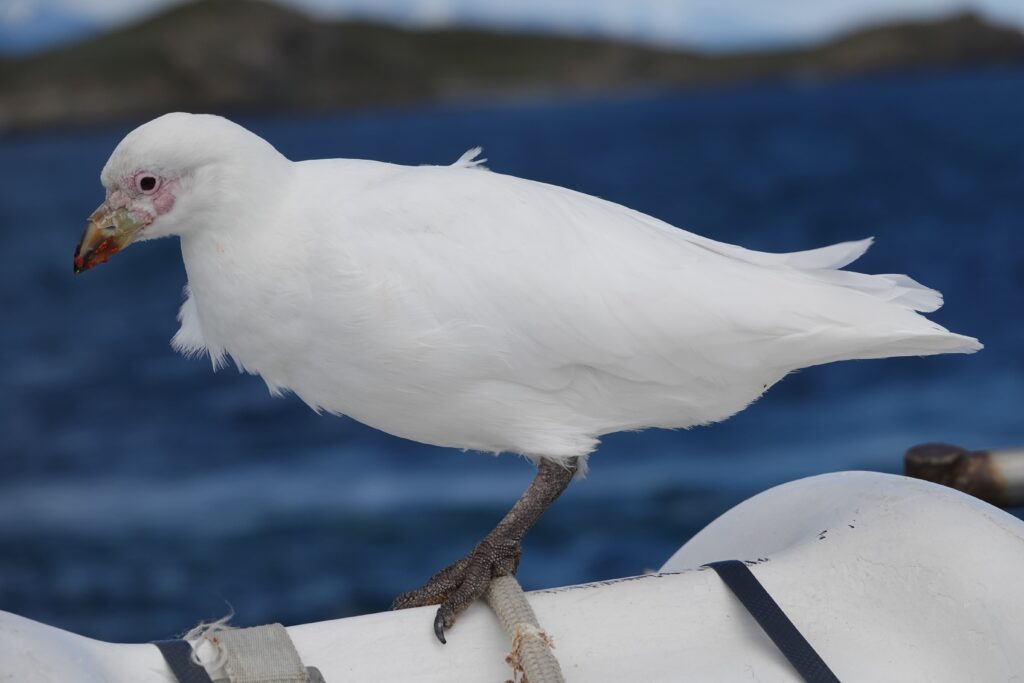
The Snowy Sheathbill is a hallmark bird of far-southern coasts, tightly linked to seabird and marine mammal colonies. Unlike most shorebirds, it does not forage in water but works the shoreline on foot, scavenging among penguins, cormorants, seals, and other colonial breeders where food scraps are abundant.
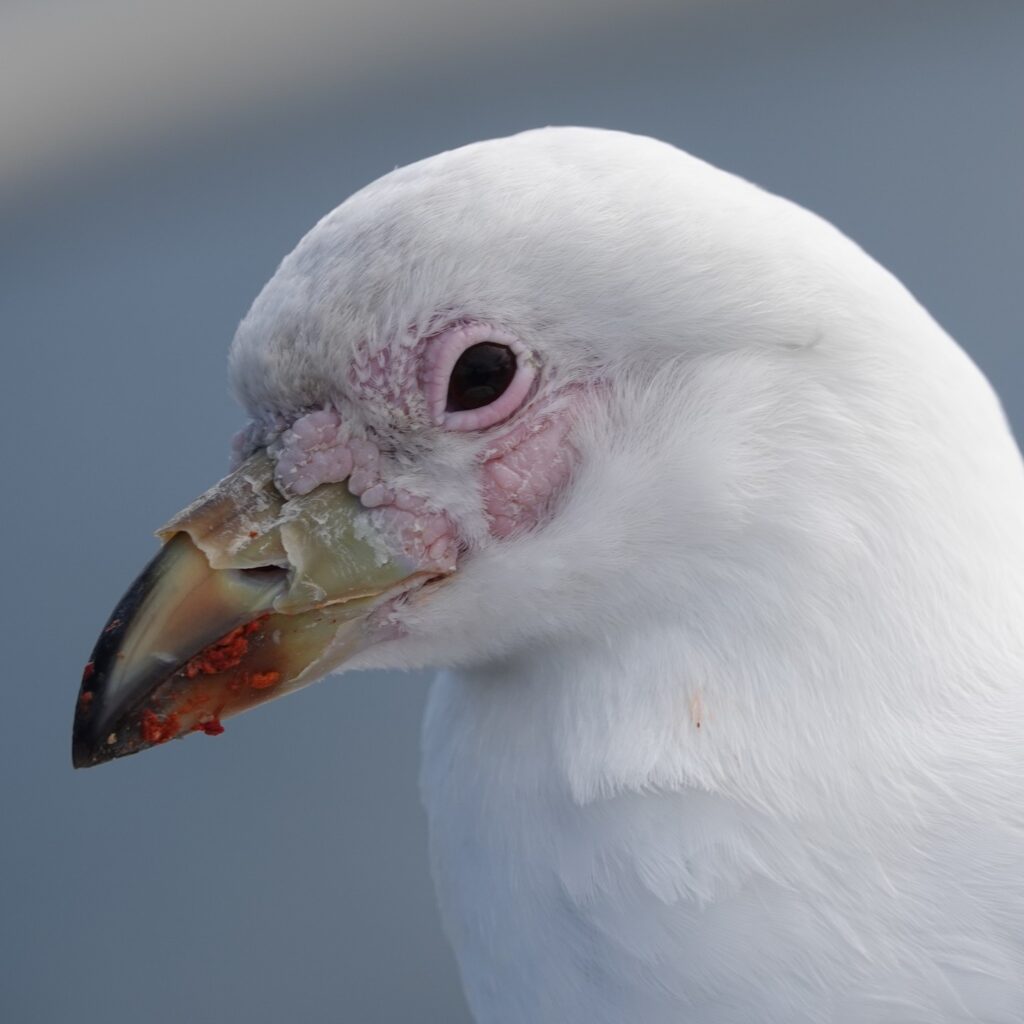
In the field it is immediately distinctive: a chunky, all-white bird with pink facial caruncles, fleshy eye-rings, and strong grey legs. Its thick conical bill bears a greenish sheath, and adults show black carpal spurs used in territorial interactions. Sexes are similar, though males are on average heavier with slightly larger bills and sheaths.
Its behavior is bold, restless, and surprisingly terrestrial — often described as pigeon-like in gait despite living in intensely marine environments.
Conservation note
Listed as Least Concern, with a stable global population. Local abundance is closely tied to the productivity and presence of seabird and marine mammal colonies. The species has historically benefited from human refuse at research stations and settlements, which has even allowed some birds to overwinter farther south than usual. Past localized threats have included hunting and contamination from waste products, but no major current global declines are documented.