TIERRA DEL FUEGO BIRDING TOURS

White-throated Caracara

Accipitriformes > Accipitridae
Daptrius albogularis

IUCN Red List category

Least Concern

Good birding season

Spring & Summer

Best time to visit

October to March

Records in Tierra del Fuego

1659 observations

328 photos

1 audios

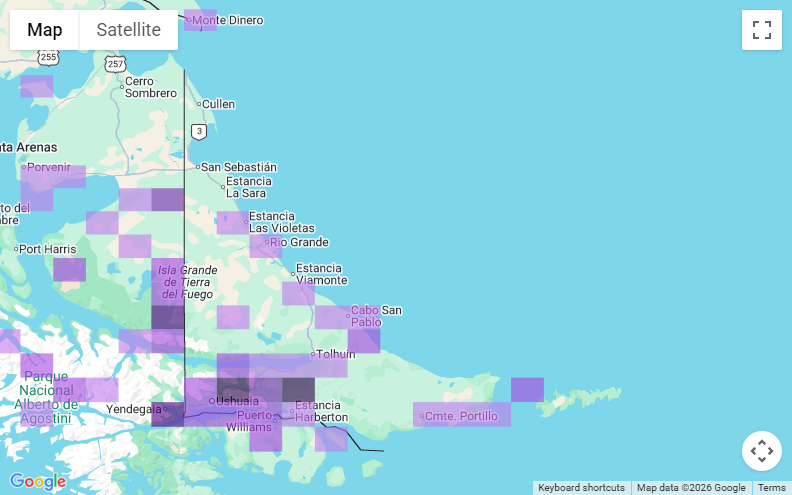
RANGE MAP BY EBIRD

OVERVIEW

About White-throated Caracara

The White-throated Caracara is one of the characteristic scavengers of the southern Andes and Patagonian highlands. Endemic to southern Chile and Argentina, it inhabits remote mountain landscapes where it is often encountered alone or in pairs rather than in large gatherings typical of other caracaras.

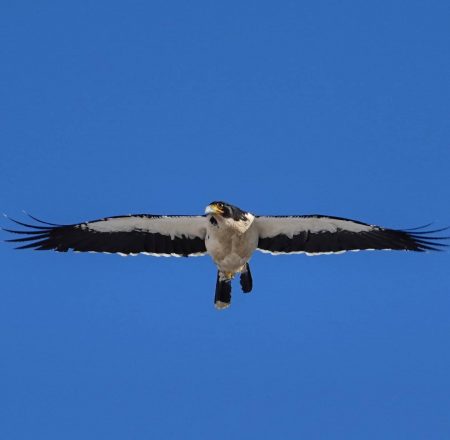
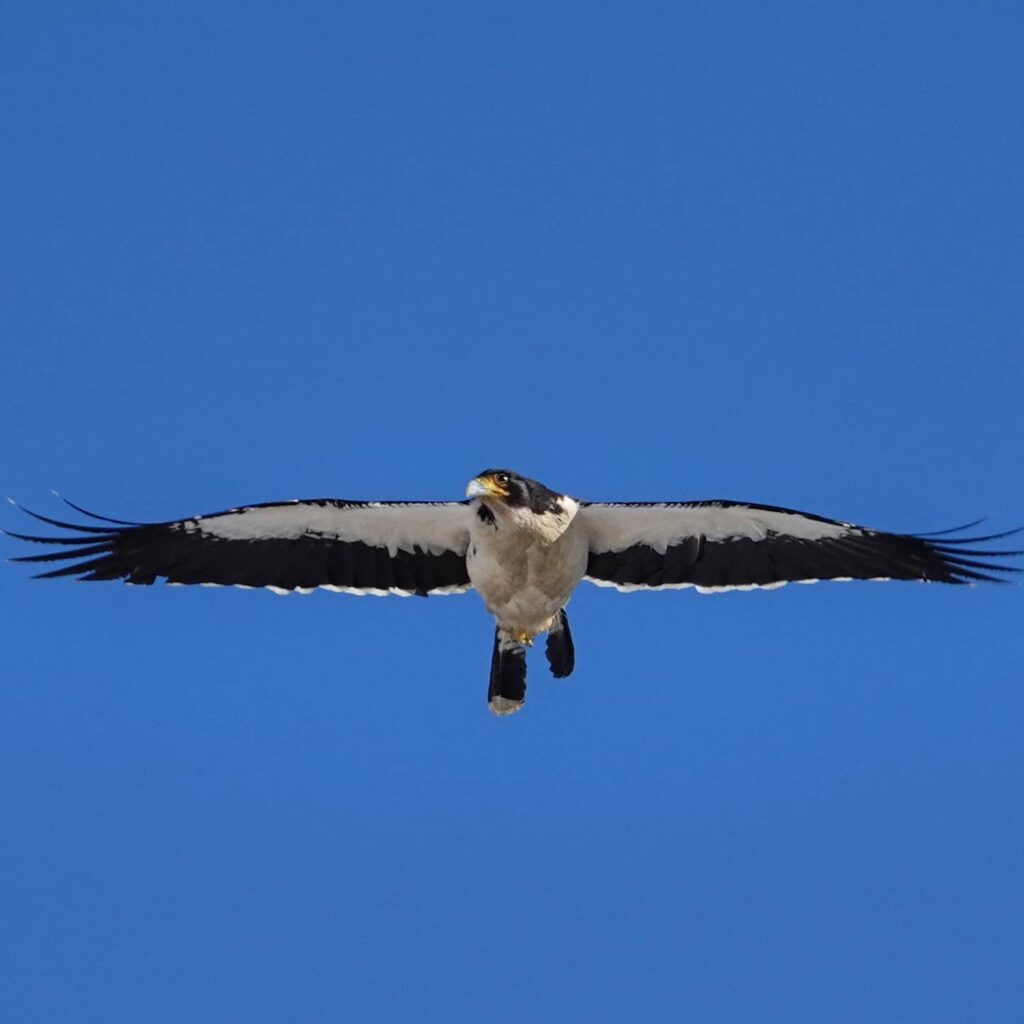
Adults are immediately recognizable by their contrasting plumage: dark brown to black upperparts set against a clean white throat, chest, and upper belly. The bright orange-yellow facial skin and cere stand out strongly against the darker head, especially in good light. Compared to its close relative, the Mountain Caracara, it tends to occupy lower elevations and shows more extensive white on the underparts.

An opportunistic generalist, the White-throated Caracara feeds largely on carrion but will also take small prey. Despite its wide range, it remains surprisingly little studied and can feel elusive due to its vast, rugged habitat.

Conservation note

Globally classified as Least Concern, the White-throated Caracara has a large extent of occurrence. However, suitable habitat within that range is more limited than broad distribution maps suggest, and nesting records remain relatively scarce.
Potential threats include poisoning from toxic baits used against predators, exposure to veterinary pharmaceuticals in livestock carcasses, and increasing wind farm development across Patagonia. Although not currently considered threatened, more research is needed to clarify population size, trends, and long-term conservation outlook.
BIRDS IMAGE GALLERY

White-throated Caracara

Habitat and distribution

The White-throated Caracara is endemic to southern South America, ranging from northern Patagonia (Neuquén and Los Lagos regions) south through the Andes to Tierra del Fuego and Navarino Island. It also occurs on islands within the Chilean fjords and in parts of the Patagonian steppe. It favors humid, mountainous terrain, including high Andean grasslands, windswept plateaus, and rugged slopes. Although primarily associated with open landscapes, it is the only member of its genus that regularly ventures into southern beech (Nothofagus) forests. It generally occurs between 500 and 2,500 meters, but may reach higher elevations in the north and descend near sea level in the far south. Movement patterns are not well understood, and the species appears largely resident within its broad Andean range.

Observation tips

  • Best searched for in open, windswept Andean landscapes, especially along ridgelines and broad valleys.
  • Often seen soaring low over terrain or perched on rocky outcrops, fence posts, or near carrion.
  • Typically encountered alone or in pairs; rarely forms large groups.
  • The clean white throat and upper belly are key identification features when viewed from below.
  • Bright orange-yellow facial skin is visible at moderate distance in good light.
  • In areas of potential overlap with Mountain Caracara, note the entirely white throat and less reddish facial coloration.

White-throated Caracara

Top birding tours

BOOK YOUR TOUR

Ready to explore Tierra del Fuego with us?

Get in touch to check availability, customize your experience, or ask any questions before booking.