TIERRA DEL FUEGO BIRDING TOURS

Yellow-bridled Finch

Passeriformes > Thraupidae
Melanodera xanthogramma

IUCN Red List category

Least Concern

Good birding season

Spring & Summer

Best time to visit

October to March

Records in Tierra del Fuego

625 observations

205 photos

11 audios

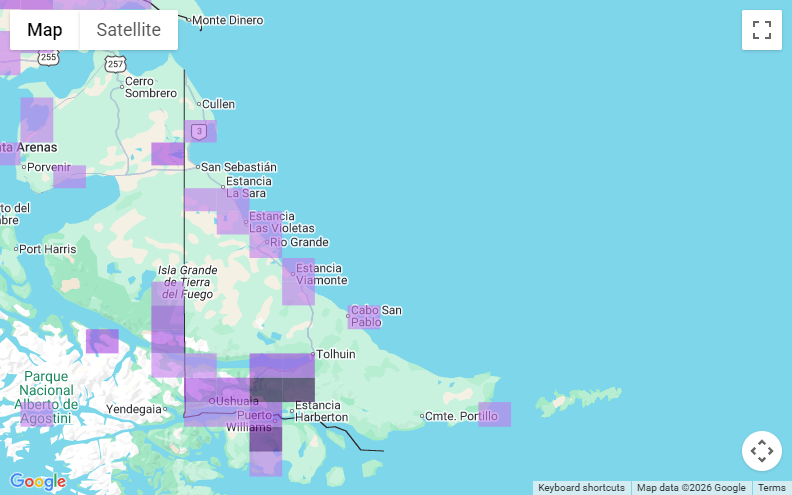
RANGE MAP BY EBIRD

OVERVIEW

About Yellow-bridled Finch

The Yellow-bridled Finch is one of the most striking passerines of the high Andes and southern Patagonia. Strongly terrestrial and often associated with windswept alpine environments, it inhabits cushion-plant slopes, snowmelt streams, and open high-elevation plateaus above treeline.

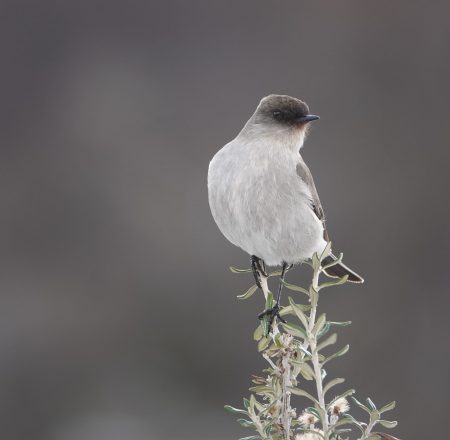
The species is notable for its marked sexual dimorphism and plumage variability. Males show a bold yellow-and-black facial pattern and may appear gray, olive, or bright yellow depending on morph. Females are streaked brown to yellowish and more subdued, though still distinctive at close range.

Two subspecies occur: a high-Andean form (barrosi) and a southern Patagonian form (xanthogramma) that can descend to sea level in Tierra del Fuego. During the nonbreeding season, the southern subspecies may form mixed flocks with its sister species, the White-bridled Finch.

Some studies suggest that ancestral wandering individuals may have reached the Tristan da Cunha archipelago, potentially giving rise to the Gough Island Finch and the genus Nesospiza — making this lineage particularly interesting from an evolutionary perspective.

Conservation note

Globally classified as Least Concern, the Yellow-bridled Finch remains patchily distributed and generally uncommon. Its extirpation from the Malvinas Islands highlights its potential vulnerability to habitat change.

High-Andean habitats are particularly sensitive to climate change, and long-term warming may affect alpine vegetation zones used by this species. Continued monitoring of both subspecies is advisable given their restricted and specialized environments.

BIRDS IMAGE GALLERY

Yellow-bridled Finch

Habitat and distribution

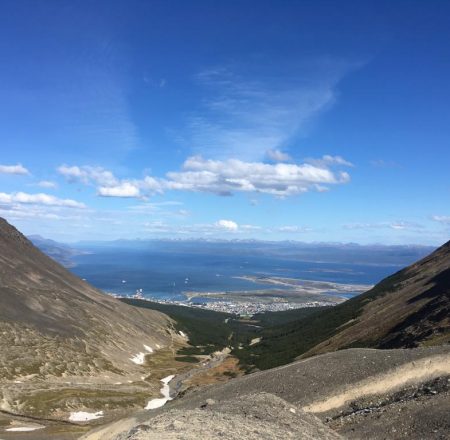
The Yellow-bridled Finch ranges along the Andes from the Aconcagua Valley south through Patagonia, reaching Tierra del Fuego, Navarino Island, and Cabo de Hornos. The Andean subspecies (barrosi) occupies high-elevation alpine habitats, often between 2,000 and 4,000 m during summer, descending in winter. The southern subspecies (xanthogramma) occurs in Patagonian steppe, open slopes, and mountainous areas in southern Patagonia and Tierra del Fuego, where it may occur from sea level up to around 1,000 m. It favors open, windswept terrain with sparse vegetation, cushion plants, rocky slopes, and snow-edge feeding areas.

Observation tips

  • Best searched for in high Andean alpine terrain, especially near cushion plants and melting snow patches.
  • Often seen walking or hopping on the ground rather than perched high.
  • Males are highly distinctive with a bold yellow-and-black head pattern; note variation between gray and yellow morphs.
  • Females are streaked and more subdued — look for the overall structure and habitat context to separate from White-bridled Finch.
  • In southern Patagonia during winter, check mixed finch flocks carefully.
  • The continental subspecies (barrosi) shows white tail markings; the southern form has yellow tail tones.

Yellow-bridled Finch

Top birding tours

BOOK YOUR TOUR

Ready to explore Tierra del Fuego with us?

Get in touch to check availability, customize your experience, or ask any questions before booking.