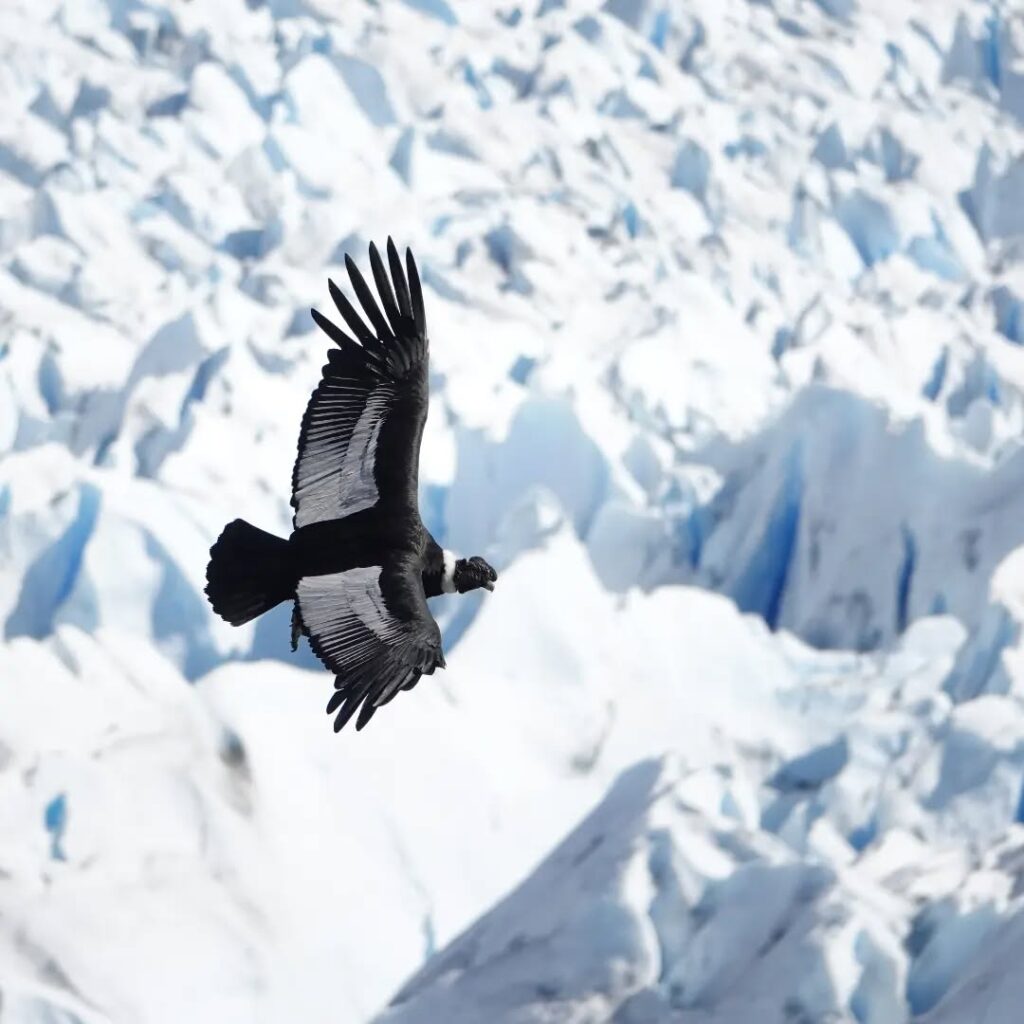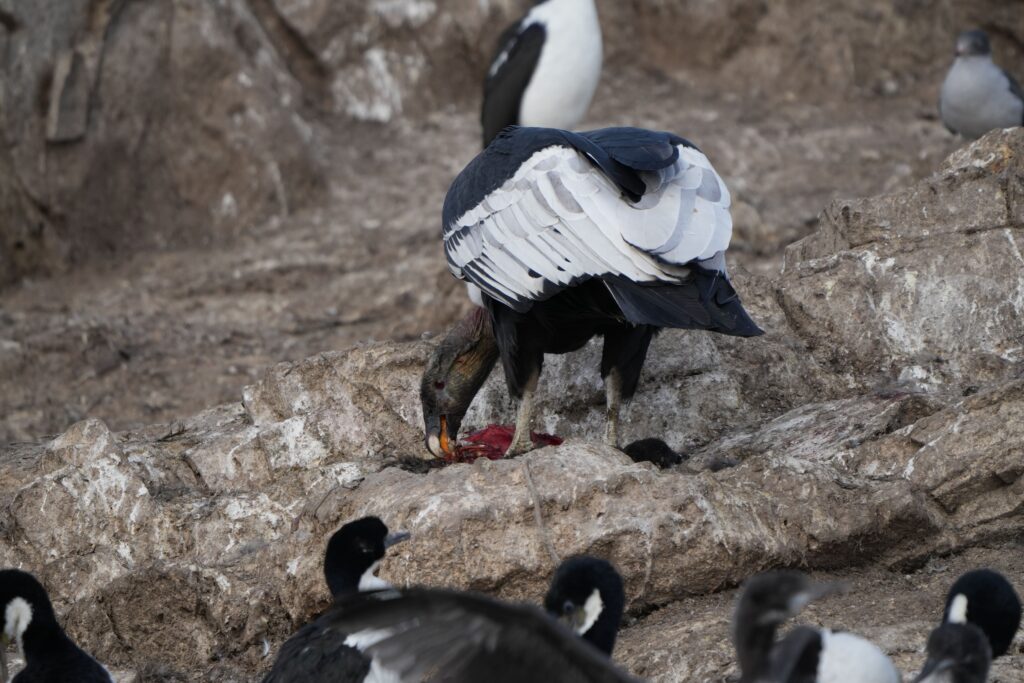
The Andean Condor is the most iconic bird of the Andes and one of the largest flying birds in the world. With a wingspan reaching up to 3.2 meters, it soars effortlessly along mountain ridges and high peaks, riding thermal currents in search of carrion.
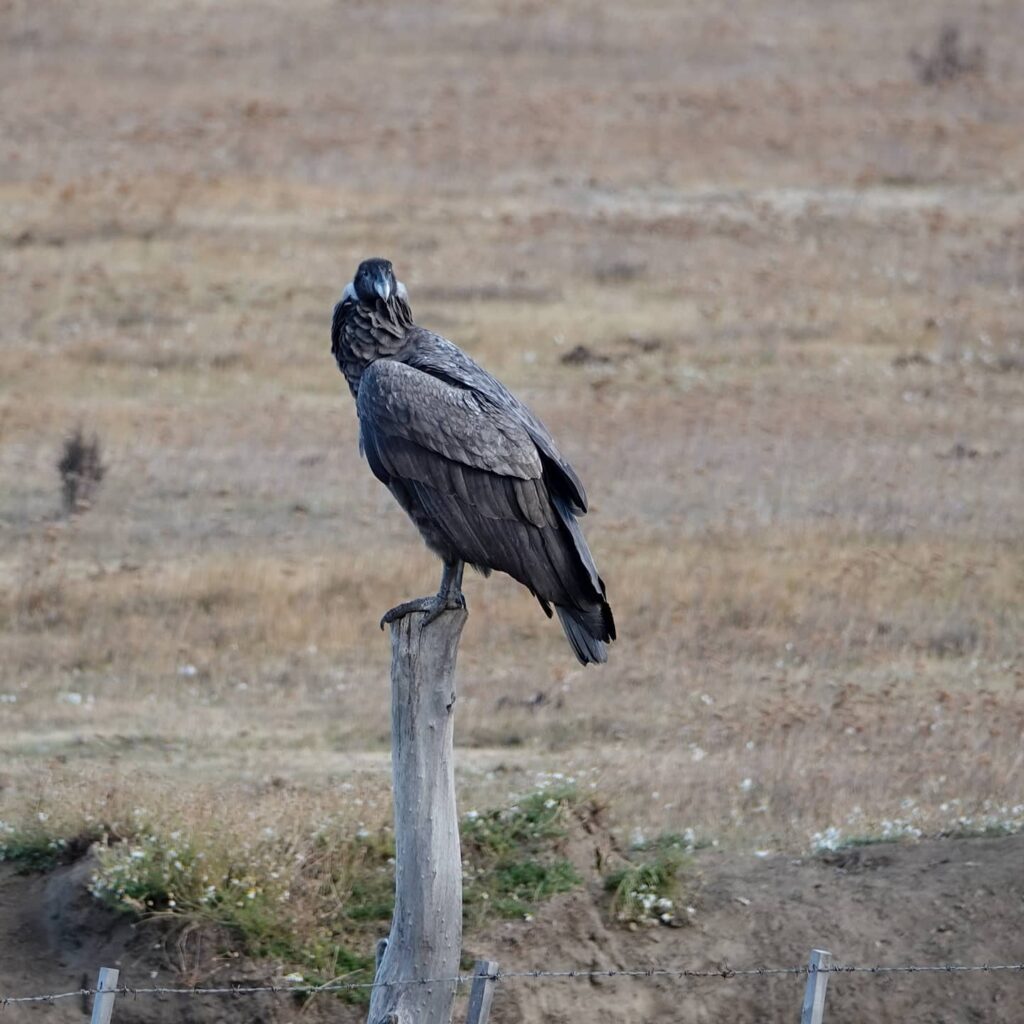
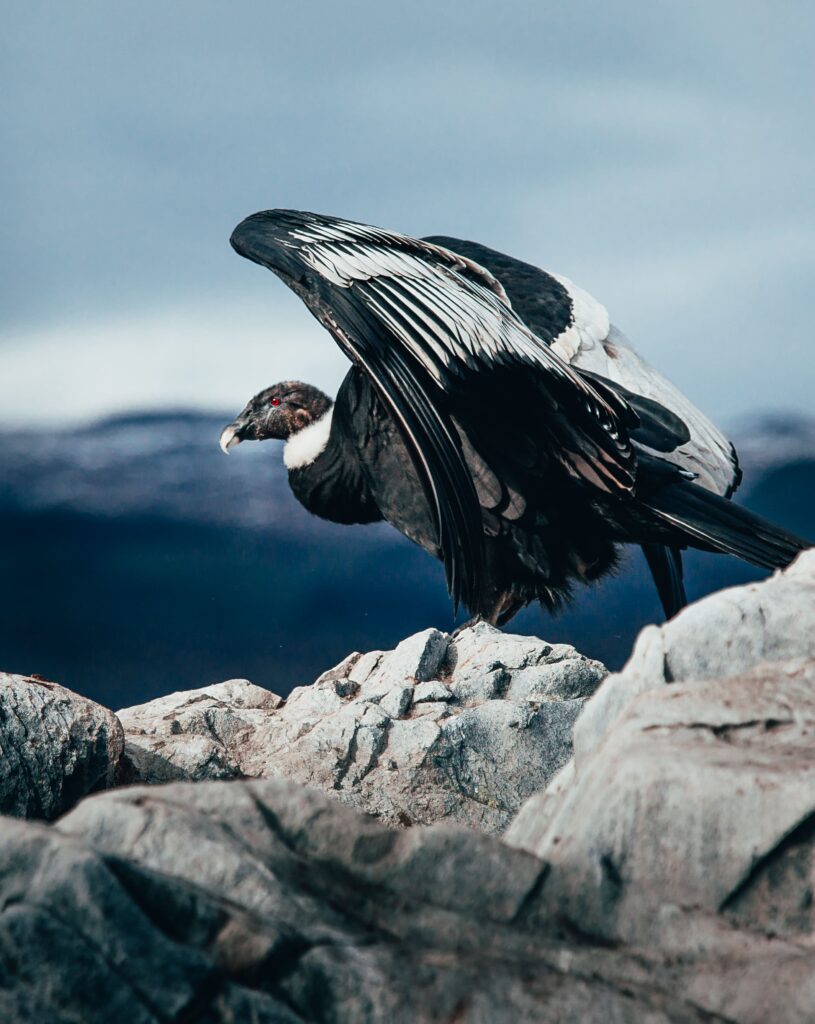
Adults are predominantly black with striking white patches on the upper wings and a conspicuous white neck ruff. Males are larger and possess a prominent fleshy comb and neck wattles, while females lack the crest and have red irides in adulthood. Juveniles are dark brown and only gradually acquire full adult plumage, which may take up to eight years.
A highly social scavenger, the condor plays a critical ecological role in nutrient recycling across high Andean and Patagonian ecosystems.
Conservation note
Classified as Vulnerable, with significant regional declines, particularly in northern parts of its range. Persecution, poisoning (including lead from ammunition), habitat change, and collisions with powerlines represent major threats. The species has very low reproductive output — typically one chick every one to two years — making populations highly sensitive to adult mortality. While still relatively numerous in parts of Chile and Argentina, northern Andean populations are fragmented and often dependent on reintroduction programs. Long-term conservation depends on reducing poisoning, protecting nesting cliffs, and maintaining healthy wild ungulate populations.