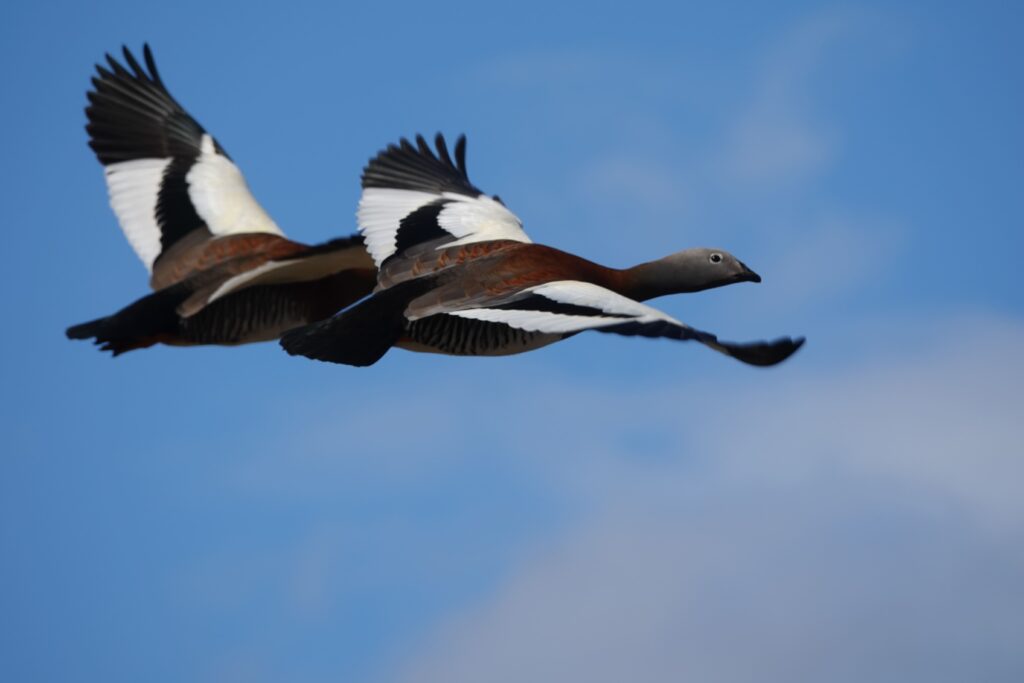
The Ashy-headed Goose is a characteristic sheldgoose of southern South America, closely associated with forest-edge environments and Andean landscapes. Unlike the more open-country Upland Goose or the strictly coastal Kelp Goose, this species shows a stronger affinity for areas near southern beech (Nothofagus) woodland. In flight, the bold white leading and trailing wing panels contrast with darker wings, making it readily recognizable among other Chloephaga.
Males and females are similar in appearance, both showing a gray head and upper neck, chestnut breast and nape, white lower belly, and finely barred flanks. This combination of features separates it from other sheldgeese with which it often associates. Although frequently found in mixed flocks outside the breeding season, it typically occurs in smaller numbers than Upland Goose, contributing a distinctive forest-steppe element to southern Patagonian goose assemblages.
Conservation note
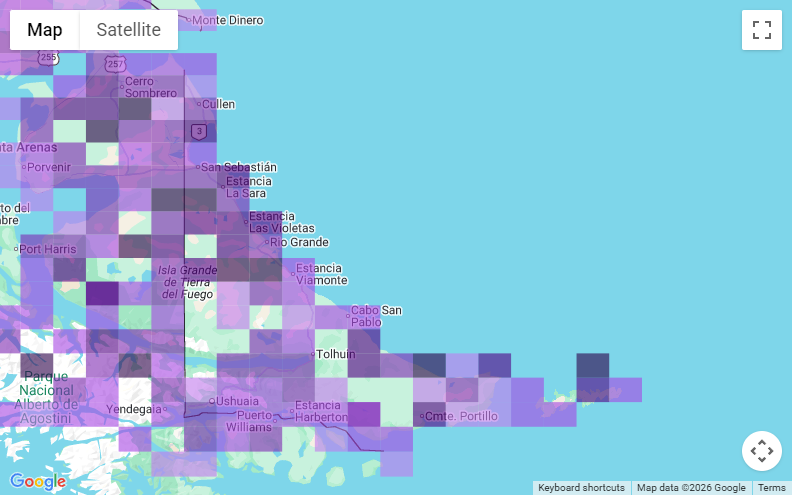
The Ashy-headed Goose is currently listed as Least Concern. Global population estimates range between approximately 25,000 and 100,000 individuals, though winter concentrations in Buenos Aires Province may be considerably higher in some years. It is considered common in parts of Chile but less numerous elsewhere in its range, and relatively scarce in Tierra del Fuego during the breeding season. While largely secure at breeding sites, wintering birds often associate with more abundant sheldgeese in agricultural landscapes, where they may be subject to persecution due to perceived competition with livestock. Continued monitoring of wintering populations is important to detect any future declines.